
Last updated November 15, 2026
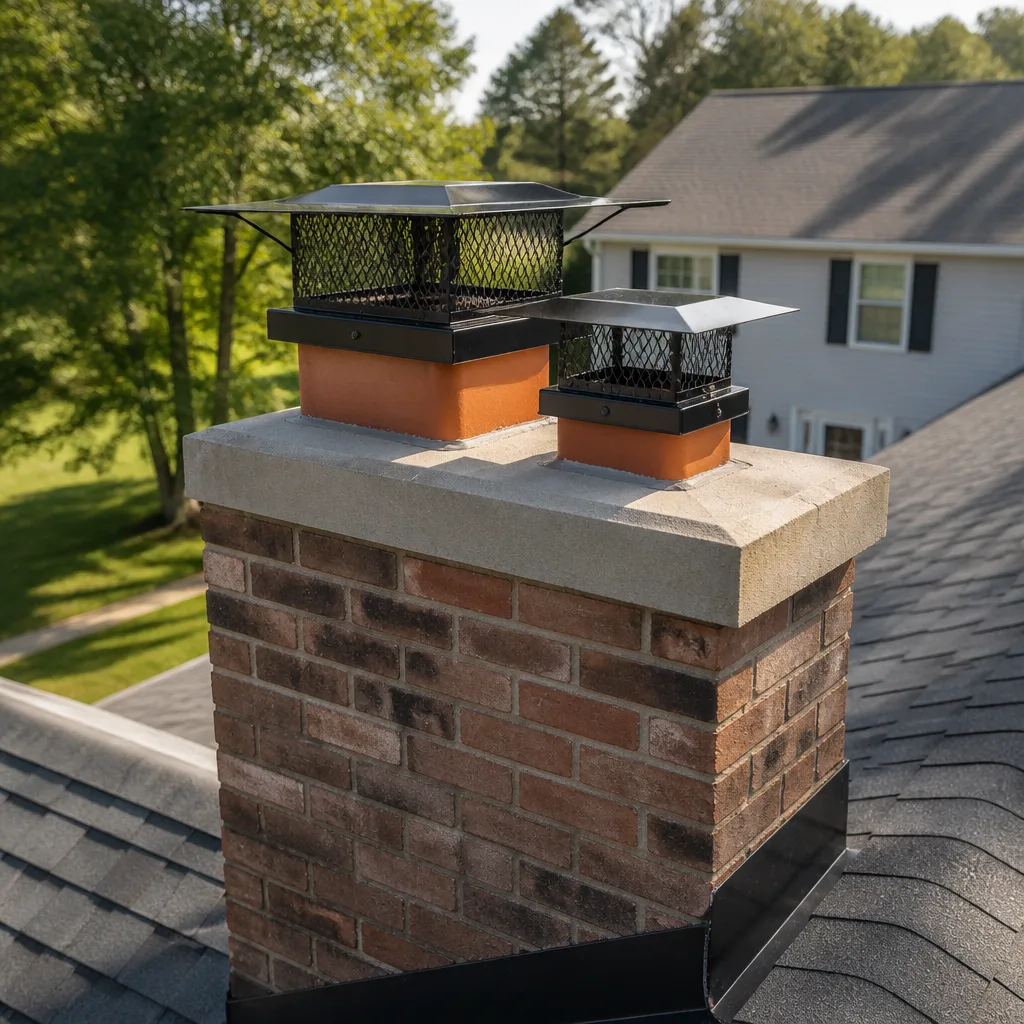 Sweep & inspection
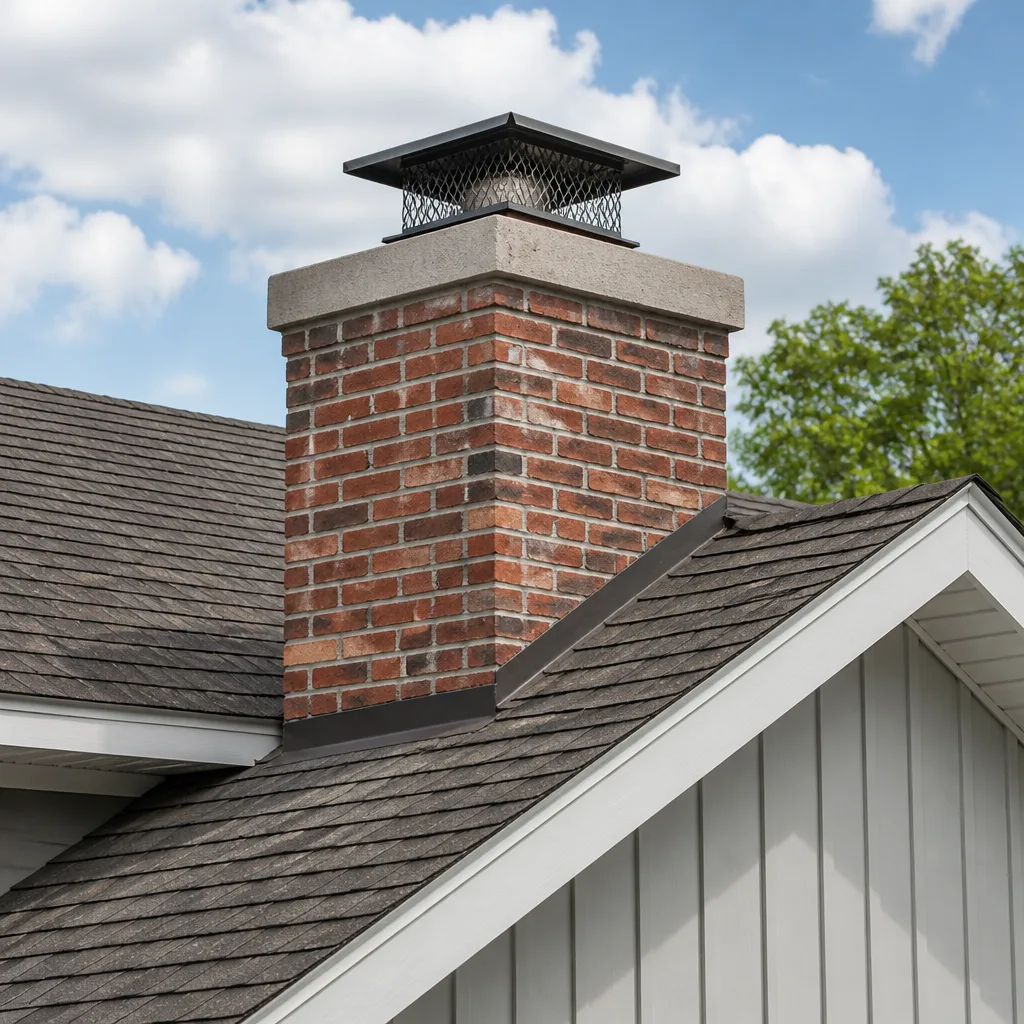 Caps & crowns
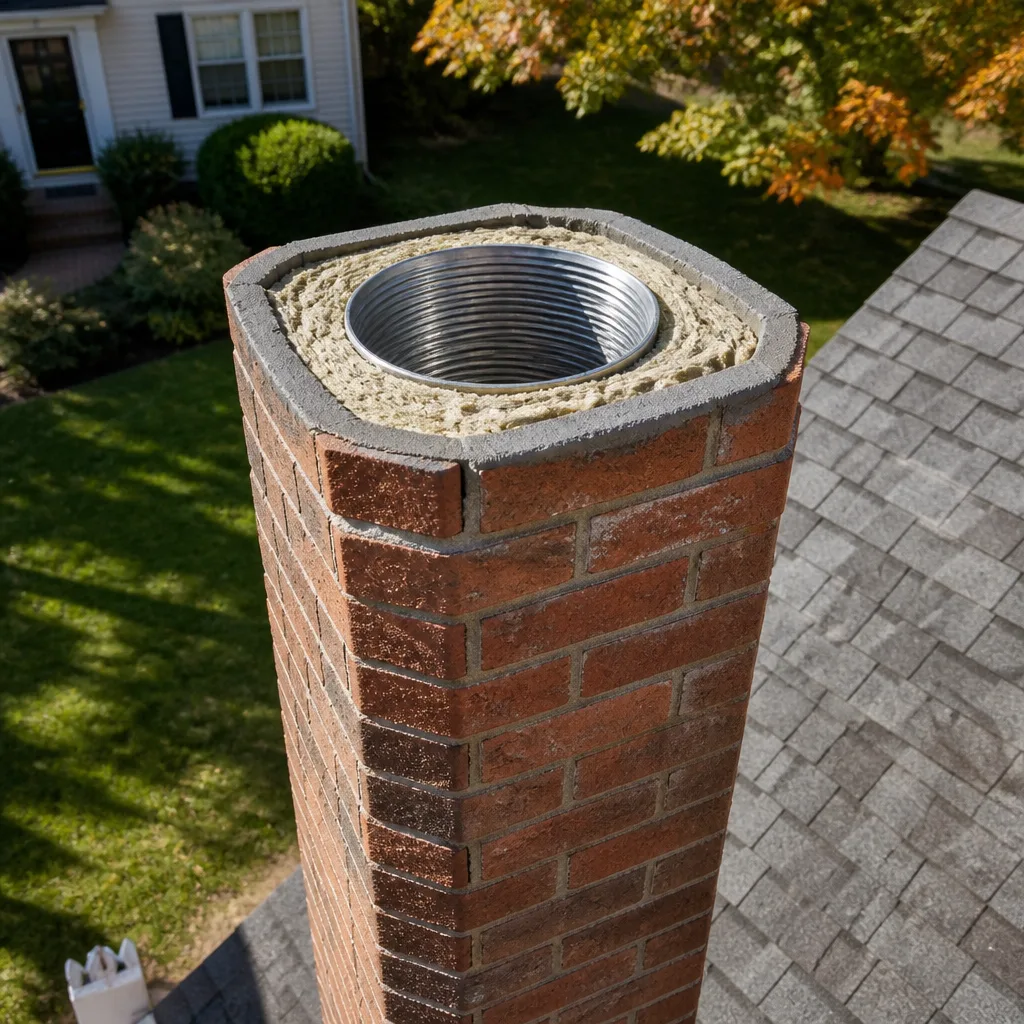 Flue relining
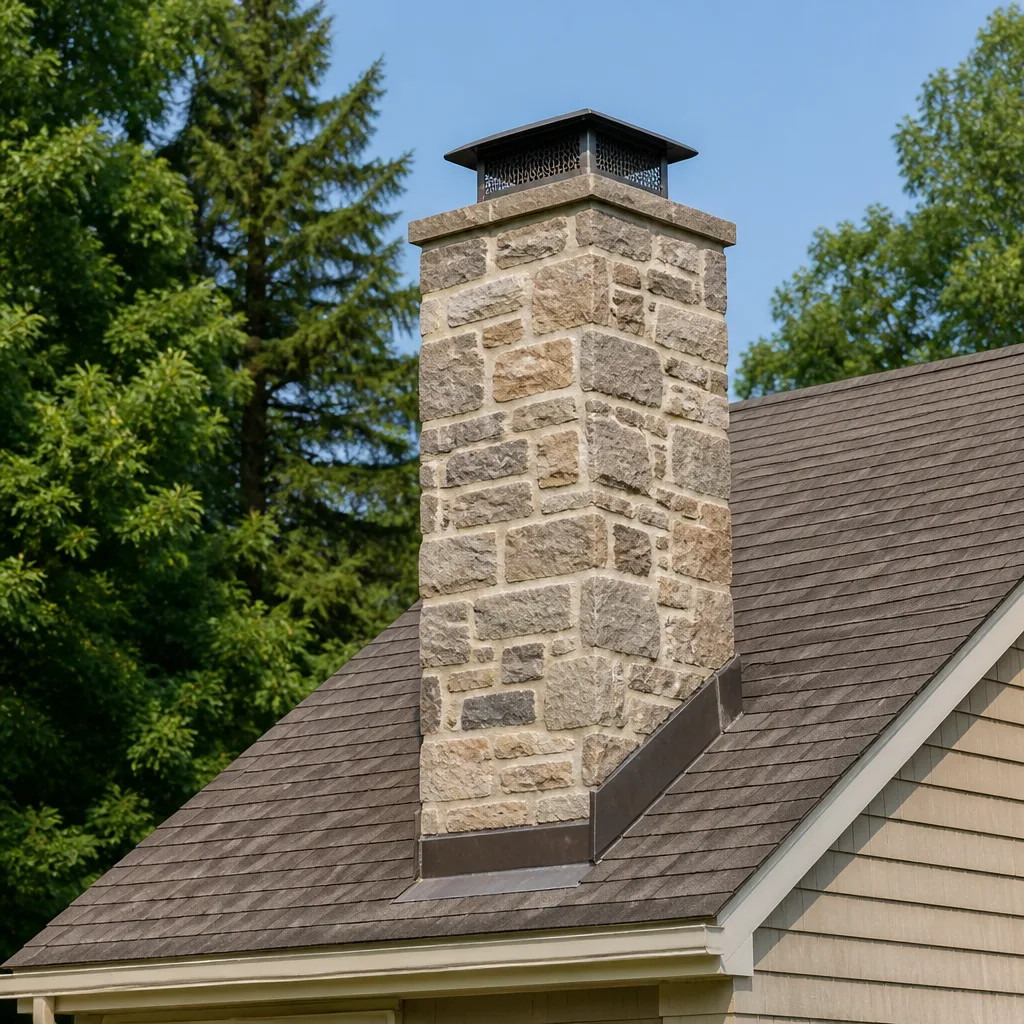 Masonry repair
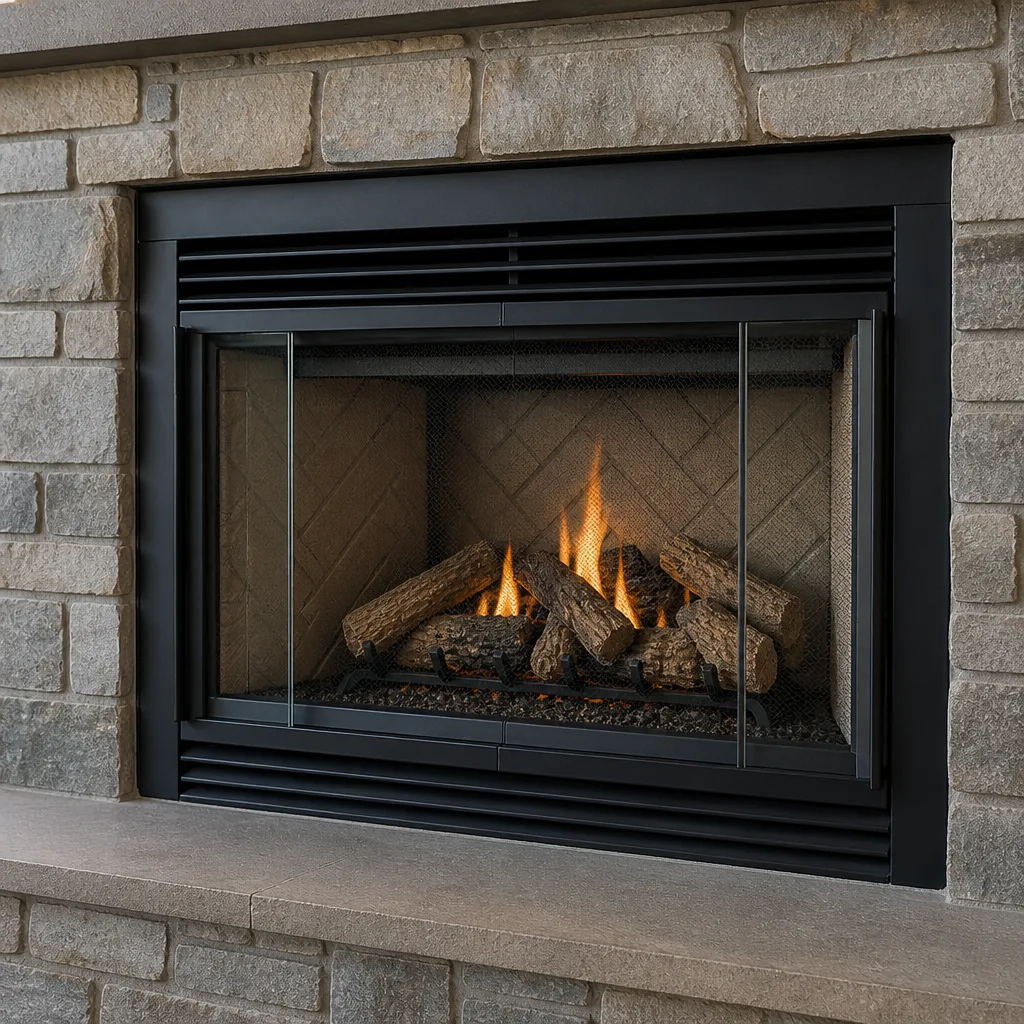 Gas fireplace service
Level 1 sweep and inspection to the NFPA 211 annual standard - flue, crown, cap, and flashing checked and photographed
Chimney sweep logs do not sweep chimneys. They loosen some creosote - which then falls where a brush and vacuum still have to collect it.
Choosing the Right Chimney Cleaning Brand: A Buyer’s Guide for St. Louis
Any company can push a brush up a flue. The real difference between a surface cleaner and a full-system chimney specialist usually shows up in what they carry, what they can install, and what they can repair once the brush comes back down. A contractor with access to professional liner and resurfacing products works differently from one who buys whatever is on the shelf at a general hardware store. The homeowners who get the most out of a chimney service call aren’t the ones hunting the lowest bid; they’re the ones who know which questions separate a real specialist from a sweep-only operation. This guide is written for St. Louis homeowners who want to evaluate a chimney company on the level of its products and capabilities, not just its advertising.
Quick Answer
The right chimney cleaning company in St. Louis is one that inspects the whole flue system before cleaning, can identify liner and masonry problems accurately, and has access to professional repair products like DuraFlex liner systems and HeatShield resurfacing materials when issues turn up. A sweep who can only clean will hand you off to someone else the moment a crack or a failed liner appears. A full-system specialist handles the sweep, the inspection, and the repair under one roof, which means one company stays accountable for the outcome.
Styles & brands we work with
- Sweep & inspection
- Caps & crowns
- Flue relining
- Masonry repair
- Gas fireplace service
Table of Contents
- Why the Products Behind the Work Tell You More Than the Marketing
- What DuraFlex Liner Systems Are and When They’re the Right Answer
- HeatShield Resurfacing: What It Fixes and What It Can’t
- Copperfield and Professional Supply Lines: What the Sourcing Signals
- How to Ask About Product Sourcing Without Sounding Adversarial
- Why St. Louis Climate and Fuel Types Change the Specification
- Warranties, Longevity, and How to Verify the Material Was Used
- A Step-by-Step Checklist for Choosing a Chimney Company
Why the Products Behind the Work Tell You More Than the Marketing
Most chimney company websites say the same things. Licensed, insured, experienced, thorough. Those words don’t distinguish anyone, because every company uses them. Product lines do distinguish companies, because you can’t bluff your way into installing a DuraFlex liner or applying a HeatShield ceramic resurfacing system without the training and supply relationships that come with real repair work. When a contractor names the specific brands they install, you’re hearing a list of what they’re actually equipped to do.
There’s a second reason product sourcing matters. Chimney repair is a business of long-term consequences. A liner installed with the wrong material, or a crown sealed with a retail caulk instead of a proper product, tends to fail in a few years, and the homeowner has no easy way to find out why. A company that buys from professional supply lines is usually buying to spec, and spec is what makes a repair last.
Consider what a full-system portfolio tells you. When a chimney company works with products from DuraFlex, HeatShield, Gelco, Olympia Chimney, Famco, and Copperfield, that combination covers flexible relining, ceramic flue resurfacing, caps and tops, and the smaller components that go into a complete system. It’s a signal that the company can handle more than the sweep itself. For a St. Louis homeowner with a house built decades ago, that range matters. Older housing stock often has liners that are still functional but not in perfect shape, and the ability to repair or resurface rather than replace changes the cost and the disruption of the job.
None of this means marketing language is useless. It means you should treat product names as evidence, not decoration. A company that can name its materials and explain when each one applies has passed a bar that most sweep-only operations never reach.
What DuraFlex Liner Systems Are and When They’re the Right Answer
DuraFlex is a flexible stainless steel liner system. It’s designed to slide down an existing flue, follow its contours, and provide a continuous, code-compliant inner passage for exhaust gases. Flexible liners matter most in older chimneys, because masonry flues are rarely perfectly straight, and the liner has to get around offsets, transitions, and turns to reach the top. A rigid liner can’t do that in most retrofit situations.
There are three broad ways a flue problem gets solved, and knowing which one applies is where a real inspector earns their keep:
- Full relining with a flexible stainless system. The right choice when the existing flue liner is cracked, deteriorated, or missing, and the chimney structure itself is sound enough to hold a new liner.
- Resurfacing with a ceramic product. Appropriate when the liner is still structurally intact but the flue walls have spalling or cracking that can be sealed and smoothed back to working condition. HeatShield is the product most often used for this.
- Masonry repair. Required when the problem is in the brickwork or mortar joints around the flue rather than in the flue passage itself. A liner can’t fix a chimney whose structure is failing.
Why does the material spec matter in St. Louis specifically? Wood-burning fireplaces here deal with a wide swing between hot, humid summers and cold winters, and that cycle moves masonry. Liners that were never meant for a full range of temperatures can crack under that stress. A flexible stainless system rated for solid-fuel use is engineered for it.
For homeowners with a gas insert or a wood stove, the calculation is slightly different, but the principle holds. The liner has to be matched to the appliance, not just the chimney. A company that recommends a DuraFlex system should be able to explain why that spec is correct for your appliance and your flue, not just that it’s what they install.
HeatShield Resurfacing: What It Fixes and What It Can’t
HeatShield is a ceramic-based resurfacing system applied to the interior of a flue to seal cracks, smooth spalling surfaces, and restore a functional flue passage without tearing out the existing liner. It’s the repair option that most sweep-only companies can’t offer, because it requires specific training and access to the product line. For the homeowner, it can mean the difference between a targeted repair and a full relining job.
HeatShield works well when the liner is still cohesive but showing damage. Cracks that haven’t separated the liner into pieces, spalling surfaces where the flue material is flaking, and joint gaps at the mortar seams are the typical scenarios. The system applies a ceramic layer that hardens into a smooth, sealed surface and brings the flue back to a working condition.
It cannot, however, resurrect a liner that has failed structurally. If the flue tile is broken into sections, missing entirely, or no longer bonded to the chimney walls, resurfacing is not a solution. In those cases, the correct answer is a full relining job. A company that offers HeatShield should be equally willing to tell you when it’s not the right repair. If a contractor proposes resurfacing without a camera inspection that shows the flue condition, ask why. You’re entitled to see what they’re seeing.
There’s a maintenance argument here as well. Resurfacing tends to be less disruptive than a reline. There’s no tear-out, the chimney goes back into service faster, and the homeowner avoids the cost and inconvenience of a larger job. In St. Louis, where a lot of housing stock dates from the middle of the last century, plenty of flues fall into the “damaged but repairable” category. A company that can do both HeatShield and full relining has more options to offer, and the conversation about what your chimney actually needs becomes about the chimney, not about what the company can sell.
Copperfield and Professional Supply Lines: What the Sourcing Signals
Copperfield Chimney Supply is one of the recognized suppliers to the chimney trade. Companies that source through professional supply lines like Copperfield are buying materials meant for installation by trained technicians, with the spec sheets, compatibility guidance, and warranty support that come along with them. That is not the same thing as buying a cap or a length of liner from a general hardware retailer, even if the retail version looks similar.
What does that signal tell you as a homeowner? A few things:
- The company is buying to a professional standard rather than to a retail price point.
- They have an established supply relationship, which usually means they’ve been doing this work long enough to have one.
- They have access to the full range of a product line, not just the parts that happen to be on a shelf.
- Warranty support on the installed product is more likely to be honored when the material came through a proper trade channel.
The same logic applies to Gelco, Olympia Chimney, and Famco products. Each of these covers a different piece of the chimney system, and a company that works across that range is signaling that they can complete a job rather than hand it off. When the cap, the top plate, the liner, and the smaller components all come from professional lines, the installation meets a consistent standard across the full assembly. When they come from miscellaneous sources, the system is less predictable.
Ask any contractor what they source and why. The ones who answer with specific product names and reasons are usually the ones who’ve thought about how their work will hold up. The ones who answer vaguely are telling you something too.
How to Ask About Product Sourcing Without Sounding Adversarial
The best way to learn what a chimney company can actually do is to ask, during the initial call, what products they use and how they source them. Most homeowners worry this will come off as suspicious. In practice, contractors who take their work seriously respond well to it, because it’s a more interesting question than “how much does it cost.”
Here is a script that works:
- “What inspection equipment do you use?” A serious company uses a camera. If they describe a visual check from the firebox only, that’s a partial inspection and won’t find liner problems higher up.
- “If you find a liner issue, what are the typical repair options?” Listen for specific product names. A company that can name HeatShield or DuraFlex has thought through the different scenarios and has the materials to solve them.
- “Where do you source your materials?” Professional supply lines like Copperfield, Olympia Chimney, Gelco, or Famco are the answer you’re after. If the response is “whatever the local store has,” that tells you something about the depth of repair work they’re set up for.
- “Can I see photos of the repair after it’s done?” Reasonable request. If the company hesitates, ask why.
- “What warranty comes with the product and the installation?” You should get a clear answer that includes both, because they’re two different things.
You’ll know within five minutes whether the contractor on the phone is comfortable with these questions. A company that does sweep, inspection, and repair as integrated work will answer them without hesitation. A sweep-only operation will often pivot the conversation back to price. That pivot is useful information. The question isn’t whether you’re paying a fair price for a sweep. It’s whether the company doing the sweep can spot a liner problem and then fix it, or will hand you to someone else the moment the job gets real.
Why St. Louis Climate and Fuel Types Change the Specification
St. Louis sits in a climate that swings hard between seasons. Hot humid summers, cold winters with repeated freeze-thaw, and a lot of thunderstorm activity through spring and early summer. For chimneys, this cycle is the primary source of wear. Masonry expands and contracts with moisture, mortar joints open up, and the freeze-thaw cycle turns small cracks into larger ones over time. A flue that looked fine a few years ago can have spalling or joint separation at the next inspection, and the fix depends on how far damage has gone.
The way St. Louis homes are built matters too. Plenty of the neighborhoods in this region have houses from the 1920s through the 1970s, which means a lot of original masonry chimneys and a lot of flues that are functional but not new. A company based around {{St. Louis} }and familiar with the housing stock will see the same pattern repeatedly: minor damage that’s repairable with resurfacing, moderate damage that calls for a flexible liner, and occasional cases where the structure has to be restored before any of that work can hold.
Fuel type drives specification further. A wood-burning fireplace creates heavy creosote and higher flue temperatures than a gas insert. A solid-fuel stove concentrates the heat in a smaller flue and can be less forgiving of liner flaws. Pellet and gas appliances have their own requirements. The liner material, the venting approach, and the resurfacing options differ by appliance, and any contractor who recommends the same solution regardless of the fuel type is not doing the analysis.
St. Louis homeowners with a gas insert should also know that gas appliances can still produce dangerous conditions. The exhaust isn’t creosote-heavy in the way wood smoke is, but carbon monoxide risk remains real, and blockages from debris, bird nests, or deteriorated liners can create it. A proper inspection covers the flue all the way to the top because that’s where the risk of obstruction is highest.
Warranties, Longevity, and How to Verify the Material Was Used
The most common frustration for homeowners after a chimney repair has very little to do with the repair itself. It’s discovering, years later, that the work was not done with the materials the contractor described. A liner that was supposed to be a flexible stainless DuraFlex system turns out to be a lower-grade substitute. A resurfacing job that was supposed to use HeatShield turns out to be applied with a generic cement. When those fail, warranty claims become complicated because the paperwork doesn’t match the install.
Preventing that means insisting on certain things before the work starts:
- Written scope of work. The estimate should list the specific product to be installed, not just the repair category.
- Photo documentation before and after. A camera photo of the flue before and after the resurfacing or liner install is the clearest evidence that the work happened and what was used.
- Product literature. For a liner or resurfacing job, a reputable company can hand you the product’s warranty and spec sheet.
- Installation warranty terms. Separate from the material warranty, this covers the labor and application.
- Cap and crown as part of the job. Material spec applies to the whole assembly, not just the flue passage.
The brands in a contractor’s portfolio correlate closely with how well those points are documented. DuraFlex, HeatShield, Gelco, Olympia Chimney, Famco, and Copperfield each carry their own warranty coverage and require installation per spec. When the materials come from those lines, the paperwork trail exists. When they don’t, verifying what’s inside the flue becomes much harder. Longevity of a chimney repair is mostly a function of whether the right material was used correctly in the first place, and a company that stands behind its work will make that easy to check.
A Step-by-Step Checklist for Choosing a Chimney Company
This is the sequence we recommend for any St. Louis homeowner comparing chimney companies. It’s an evaluation framework, not a guarantee, but it covers the things that actually matter.
- Confirm the company does sweep, inspection, and repair. A single-company scope means nobody has to hand off the job when a real repair turns up.
- Ask what inspection method they use. Camera inspection is the standard for finding liner cracks, blockages, and creosote problems above the firebox.
- Ask which product lines they install. DuraFlex for flexible relining, HeatShield for resurfacing, and professional supply relationships like Copperfield, Gelco, Olympia Chimney, or Famco for components.
- Request the written estimate before booking. It should specify materials by name, not just describe the repair type.
- Ask for the after-inspection photo report. Any company using a camera already produces this. It’s the clearest evidence of what they found and what they did.
- Review the warranty coverage. Both the product warranty and the installation warranty should be part of what you’re buying.
- Ask how the sweep and any repair will be scheduled. A clear process for how work is sequenced tells you how the company runs.
Run through this list with two or three companies and the differences become obvious. A contractor comfortable with all seven items is usually set up for the full scope of chimney work. One that stumbles on items three, four, and five is telling you they’re not in that business. There’s nothing wrong with hiring a sweep-only company for a light cleaning. There is something wrong with hiring one to fix a liner problem they can’t properly resolve. The chimney sweep you book should be the same company you’d call for a chimney repair, or the accountability gap is already baked in.
One more note on St. Louis specifics. Housing age in neighborhoods across the region runs the full span from pre-war to late-century. If you’re in a house with an original chimney and haven’t had a camera inspection in a while, treat that as a starting point, not a luxury. A chimney sweep is the easy part. Finding out what’s above the damper is where the value sits. Before you hire anyone, it’s worth understanding the basics behind a St. Louis chimney service call so you can ask useful questions.
Common Mistakes to Avoid
- Choosing on price alone. Two quotes that look similar can hide big differences in the materials used. A lower quote that specifies generic parts costs more in the long run than a slightly higher one that names DuraFlex or HeatShield. Ask what’s in the estimate before you compare the numbers.
- Skipping the camera inspection. A sweep without an inspection is a guess. Liner cracks and blockages above the firebox aren’t visible to the eye, and the only way to know the flue is safe is to see it. In St. Louis’s older housing, this matters more, not less.
- Assuming a sweep-only company can do the repair. Many small operations do good cleaning work and then refer out anything structural. If the company can’t install a liner or perform resurfacing, the repair phase becomes a separate project with a different contractor and a fresh round of accountability questions.
- Accepting resurfacing when a full reline is needed. HeatShield and similar products are excellent for the right condition, but they can’t fix a structurally failed liner. If a contractor recommends resurfacing without showing you camera evidence, ask to see the flue.
- Ignoring the fuel type in the recommendation. A liner specified for a gas insert isn’t automatically correct for a wood-burning fireplace, and vice versa. St. Louis homeowners who use a wood stove alongside a fireplace have two different systems to evaluate.
- Failing to keep the paperwork. Material spec sheets, the written estimate, and the post-inspection report are what you’ll need if a warranty claim ever comes up. Keep them together and in a place that won’t get lost.
- Booking a sweep without asking what happens next. Before you hire, confirm how the company handles what they find. The best chimney company has a clear process for the sweep, the inspection report, and the repair estimate that follows.
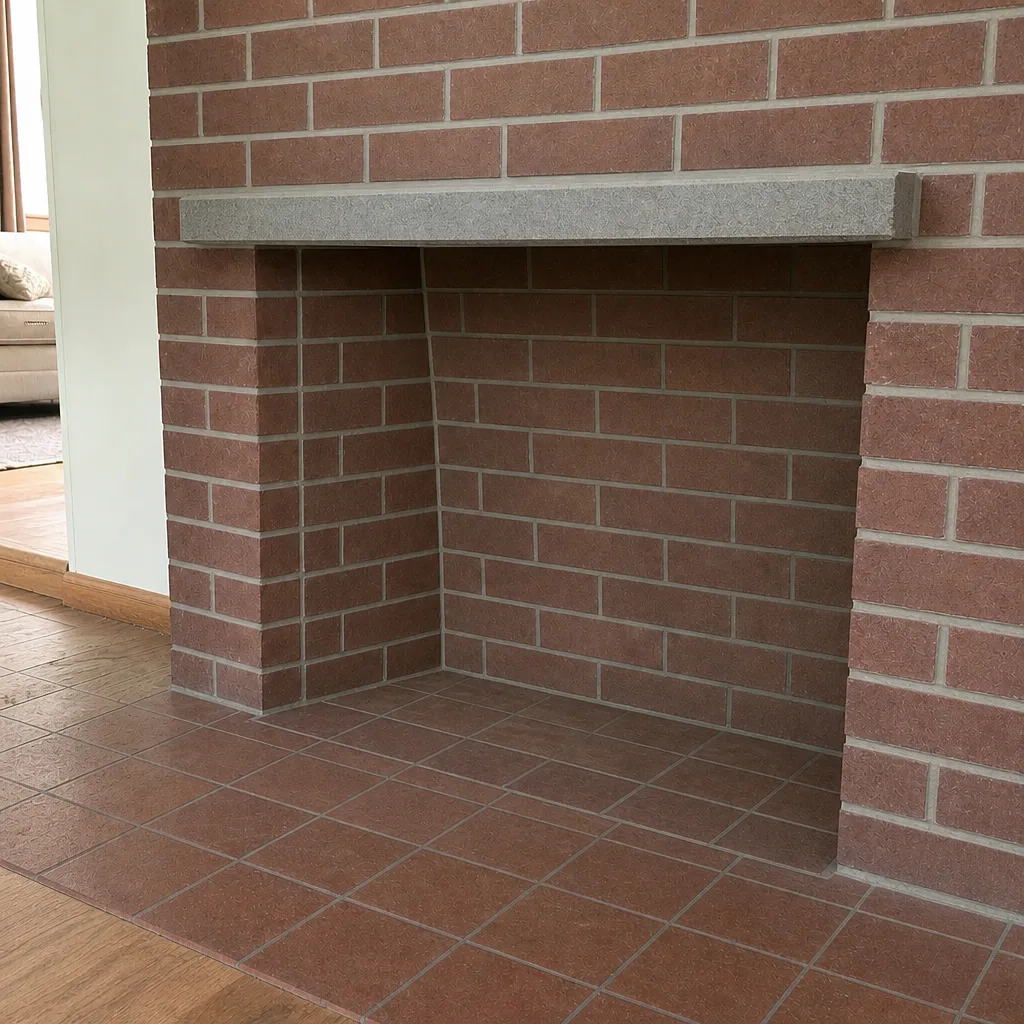
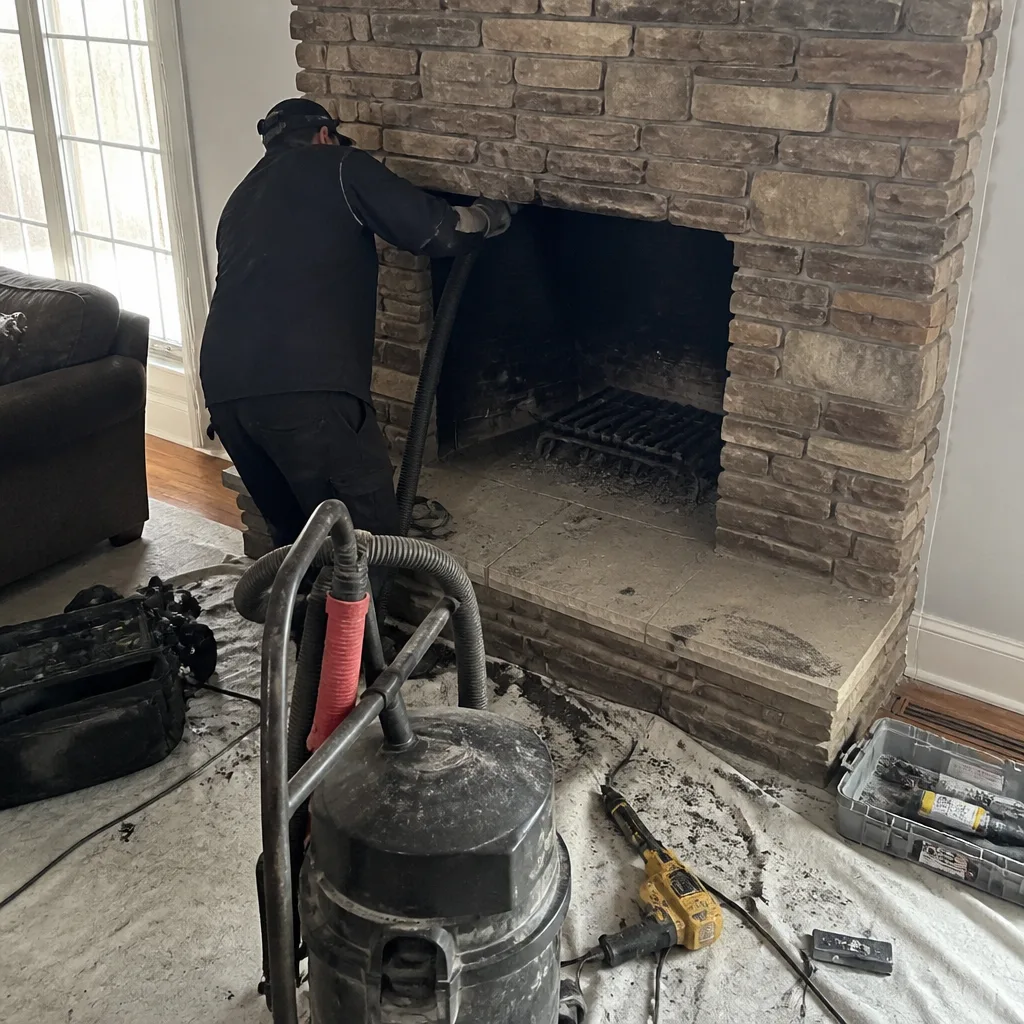
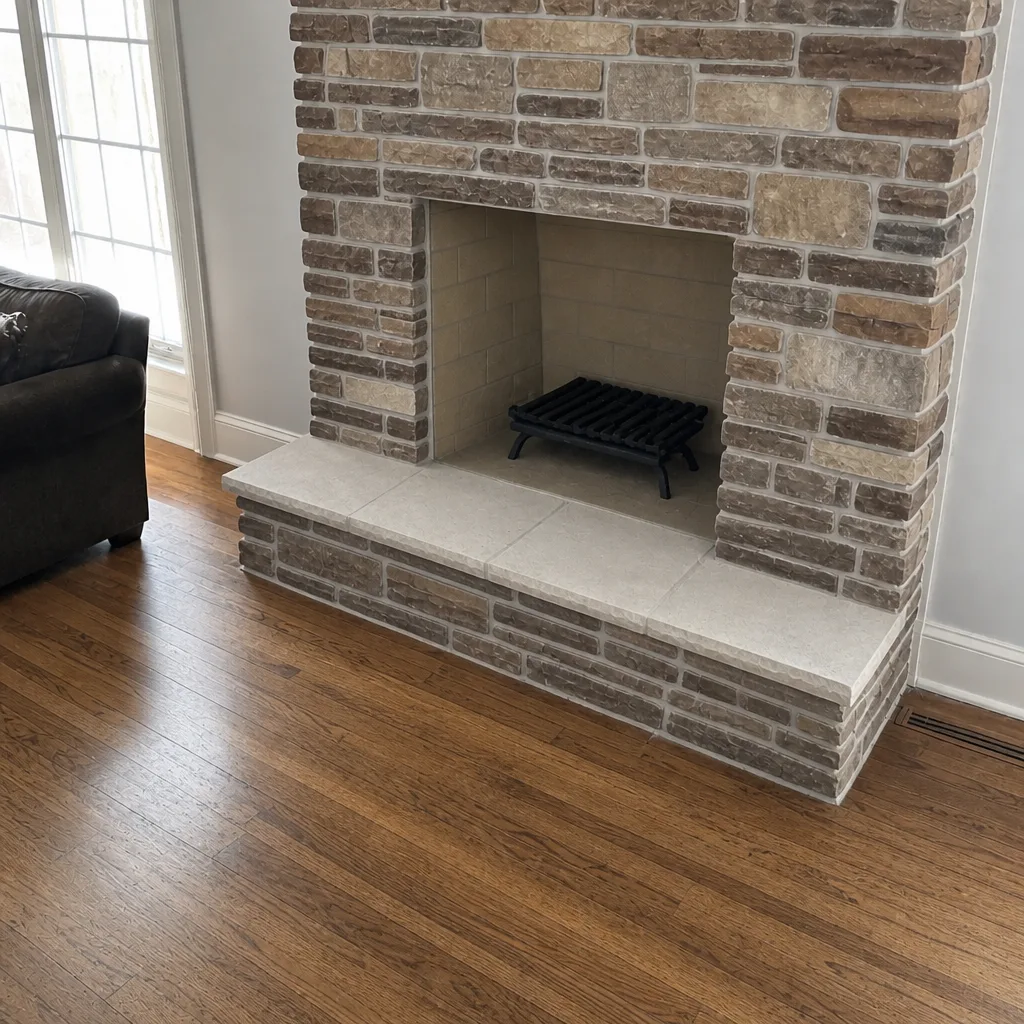
See the difference
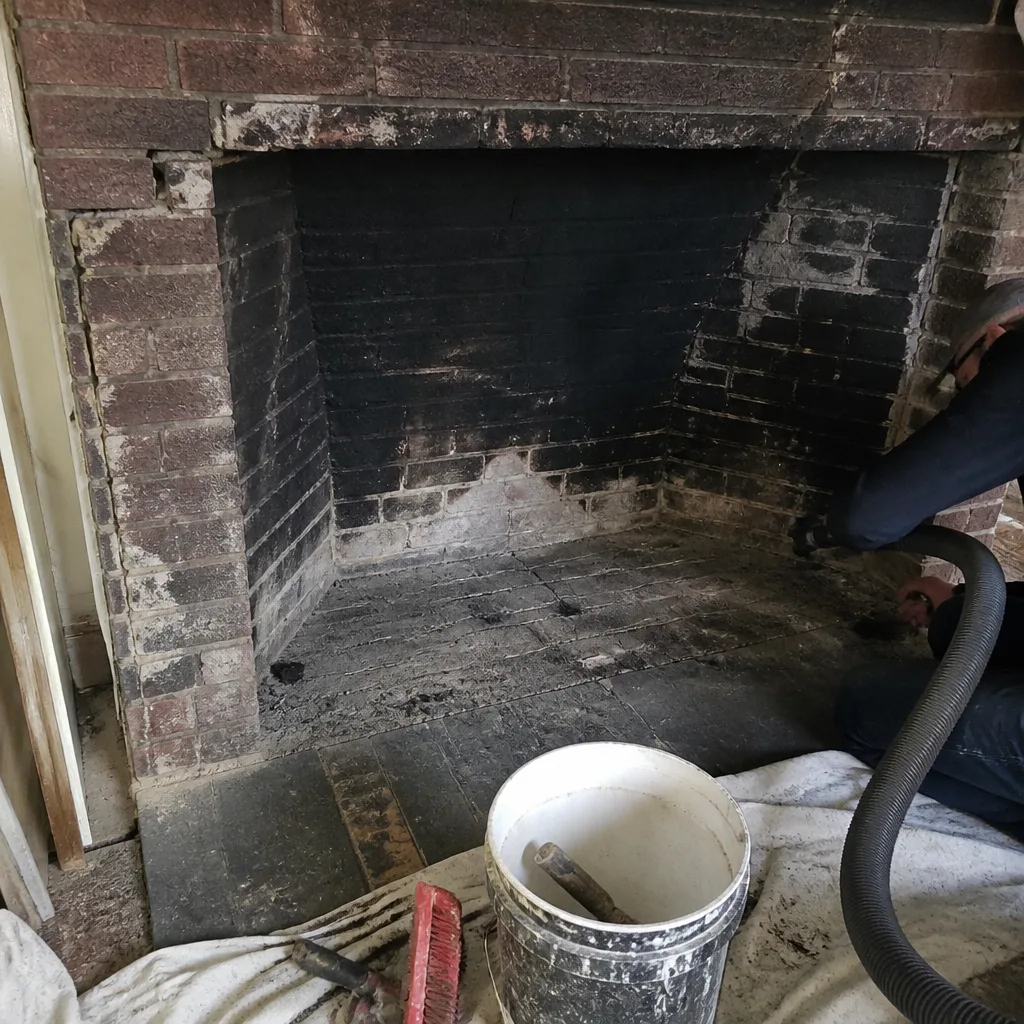 Before
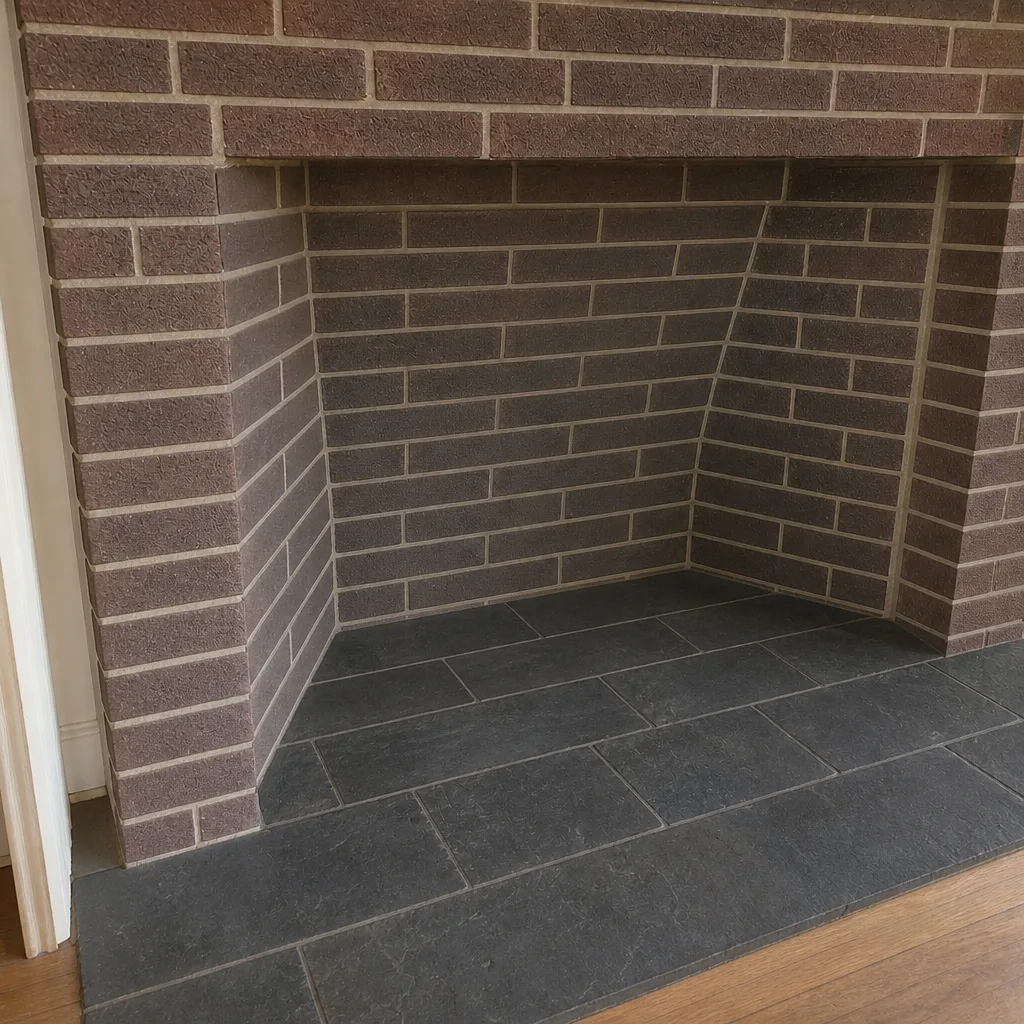 After
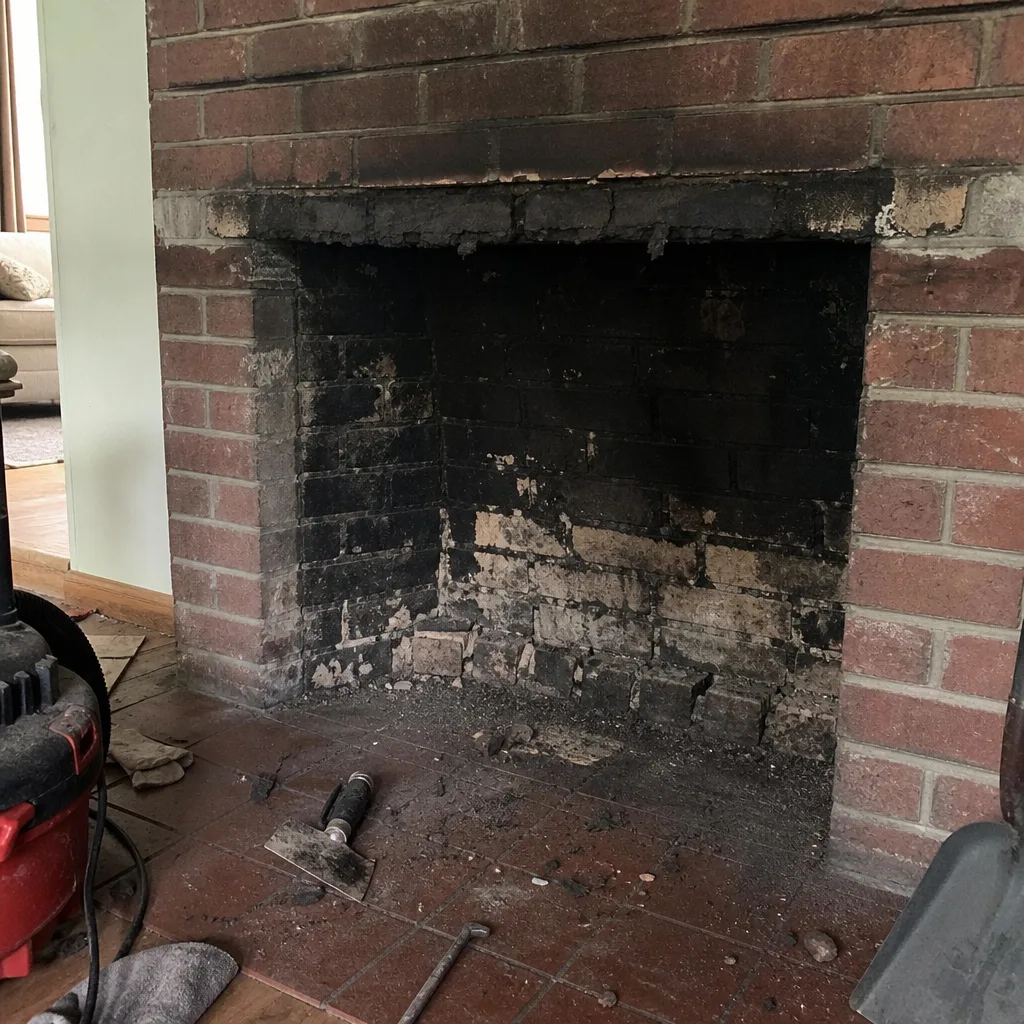 Before
 After
 Before
 After
When to Call a Professional
A chimney is one of the few parts of a house where “I’ll deal with it later” can carry real safety consequences. Call a professional if you notice a persistent smoky smell in the house when the fireplace isn’t running, if smoke backs into the room when you use the fireplace, if creosote has visibly built up on the damper or firebox, if you’ve never had the flue inspected, or if a previous repair has gone past its useful life. Call if there’s a strong draft or an unexplained odor that comes and goes with the weather. Call if a fireplace hasn’t been used in years and you want to start using it again. Any of those is a reason to book an inspection before the next burn.
Hawk Chimney Sweep offers free estimates in St. Louis. One call covers Hawk Chimney Sweep across the full set of services: sweep, inspection, and repair, with material specs you can review before work begins. If you’re not sure whether your chimney is due, ask us on the phone. We’d rather tell you it can safely wait than sell you work that doesn’t need doing yet.
Frequently Asked Questions
Look for three things: full-system inspection with a camera, the ability to repair what they find, and named professional product lines behind the work. A company that only sweeps is fine for a light cleaning, but the moment a liner issue appears, you’ll want one who can install a DuraFlex system or apply a HeatShield resurfacing without subcontracting it. Ask about all three before booking.
You need a camera inspection. A sweep alone clears the flue below the damper, but cracks, blockages, and liner problems higher up aren’t visible to the eye from inside the firebox. In older St. Louis housing stock, a camera inspection is the only reliable way to know whether the flue is actually safe. A proper inspection includes a photo report you keep.
HeatShield resurfacing restores a liner that’s damaged but structurally sound: cracks, joint gaps, and limited spalling get sealed with a ceramic layer. A full reline with a system like DuraFlex replaces the flue passage entirely, and it’s the right solution when the existing liner has failed, separated, or is missing. A camera inspection is what tells you which one applies.
The brands tell you what the company is actually set up to do. Contractors who work with DuraFlex, HeatShield, Gelco, Olympia Chimney, Famco, and Copperfield have trained on those systems and source through professional supply lines like Copperfield. Contractors who use generic retail materials are usually set up for cleaning, not full-system repair, and their work tends to show it in a few years.
An annual inspection is the standard guidance for a chimney in active use. St. Louis’s freeze-thaw cycles put pressure on masonry and liners year-round, so yearly camera checks catch small cracks before they turn into repairs. If the chimney isn’t used often, the inspector’s recommendation on frequency should follow what the flue actually looks like, not a fixed schedule.
Usually not. Liner installation and resurfacing require specific training, product access, and equipment that most cleaning-focused operations don’t have. If the company you’ve booked for a sweep recommends a liner or resurfacing job but can’t perform it themselves, you’re looking at a contractor handoff, which means two different companies and two different standards to verify. Call us at (866) 596-7310 if you’d rather have one company cover the whole scope.
The Bottom Line
The products a chimney company uses are a better indicator of what they can actually do than anything on their website. A contractor who installs DuraFlex liners, applies HeatShield resurfacing, and sources through professional lines like Copperfield, Gelco, Olympia Chimney, and Famco is set up to solve liner and flue problems, not just push a brush through them. In St. Louis, where the housing stock and the climate both push chimneys toward repairs, that difference shows up in the work. Use the checklist in this guide, ask the sourcing questions, and keep the paperwork. If you’d like to talk through your chimney with a specialist, call (866) 596-7310 for a free estimate.
Call (866) 596-7310. We answer 24/7. Fast dispatch from 7am to 7pm, Sunday through Friday.
Written by the team at Hawk Chimney Sweep.