
Last updated November 15, 2026
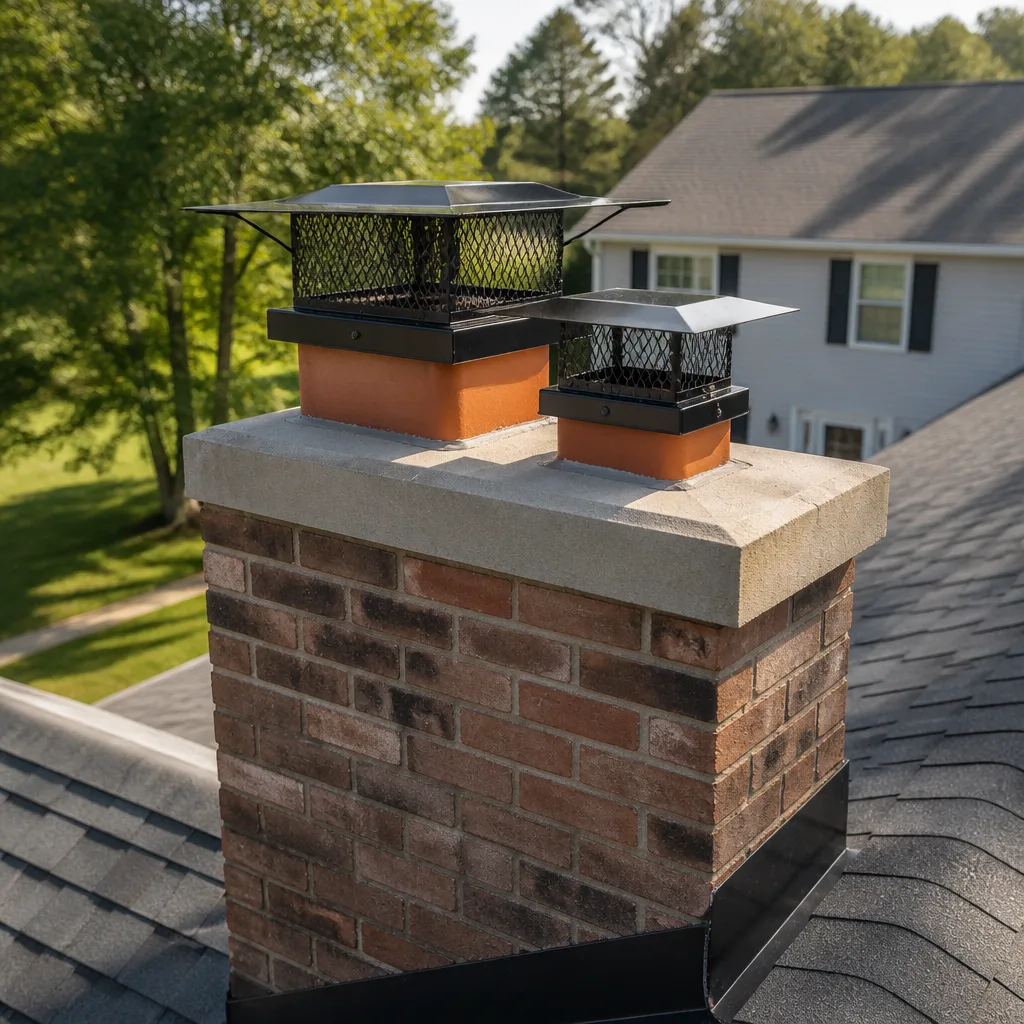 Sweep & inspection
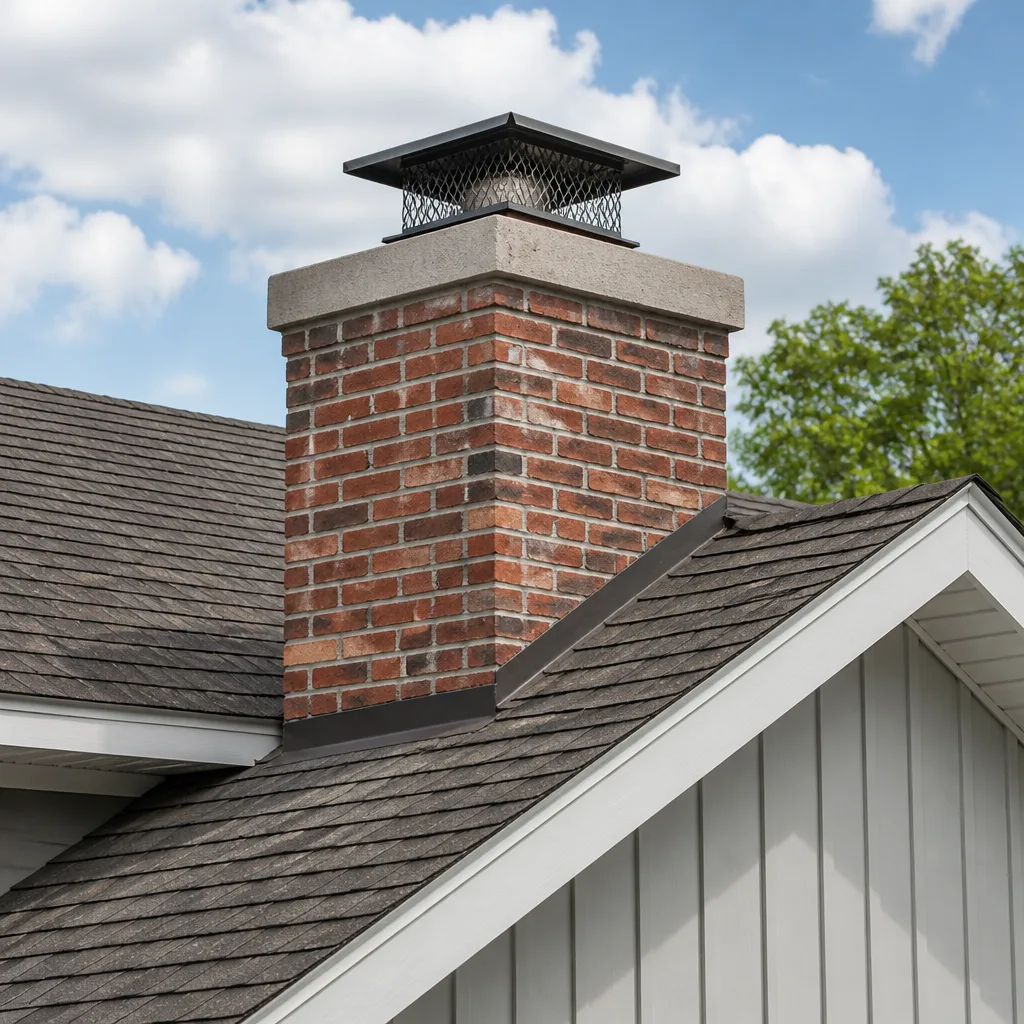 Caps & crowns
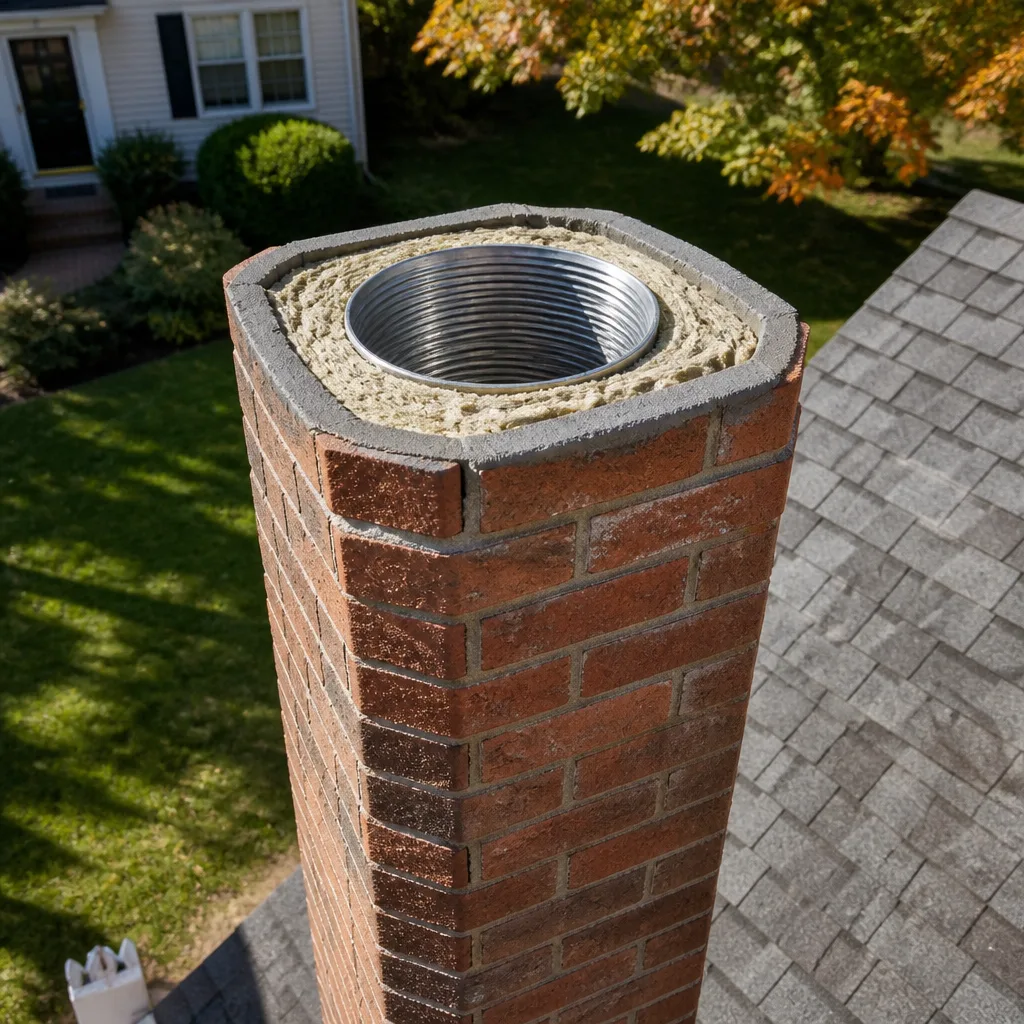 Flue relining
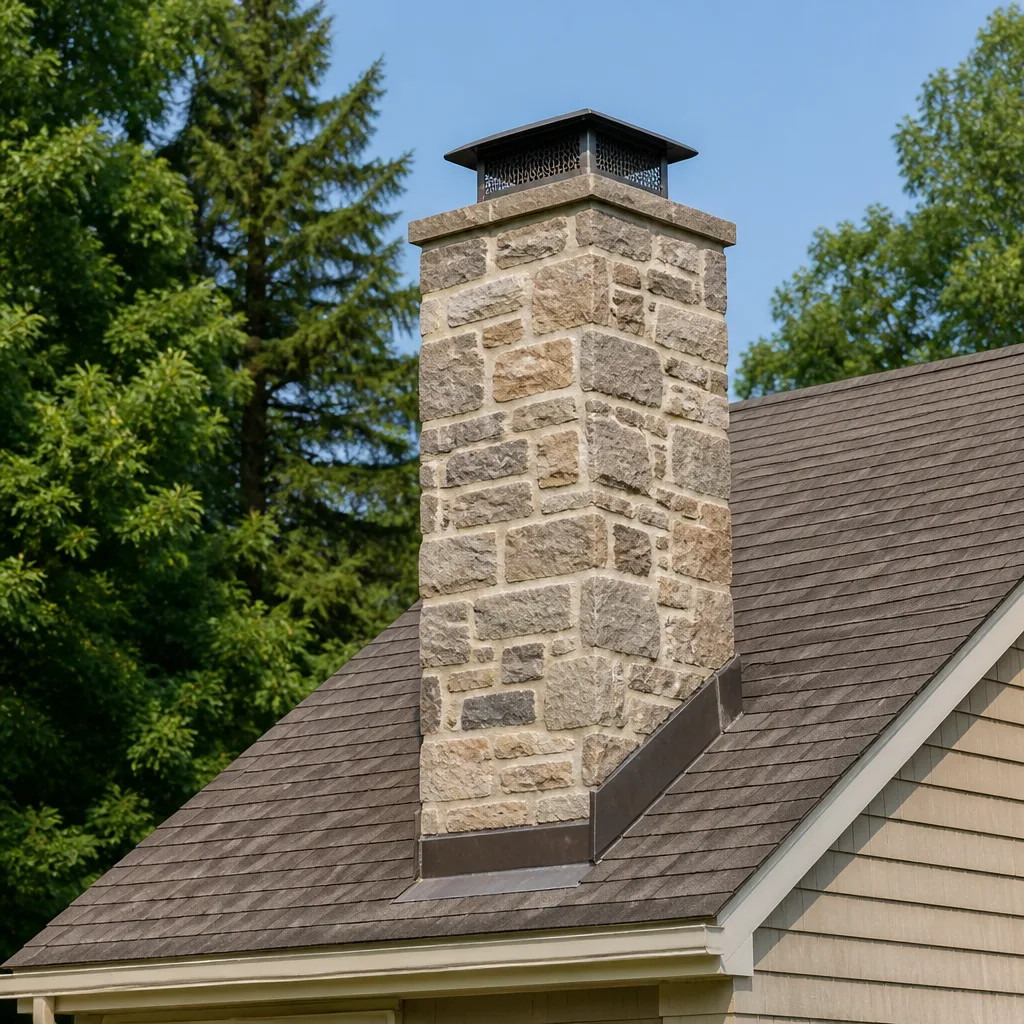 Masonry repair
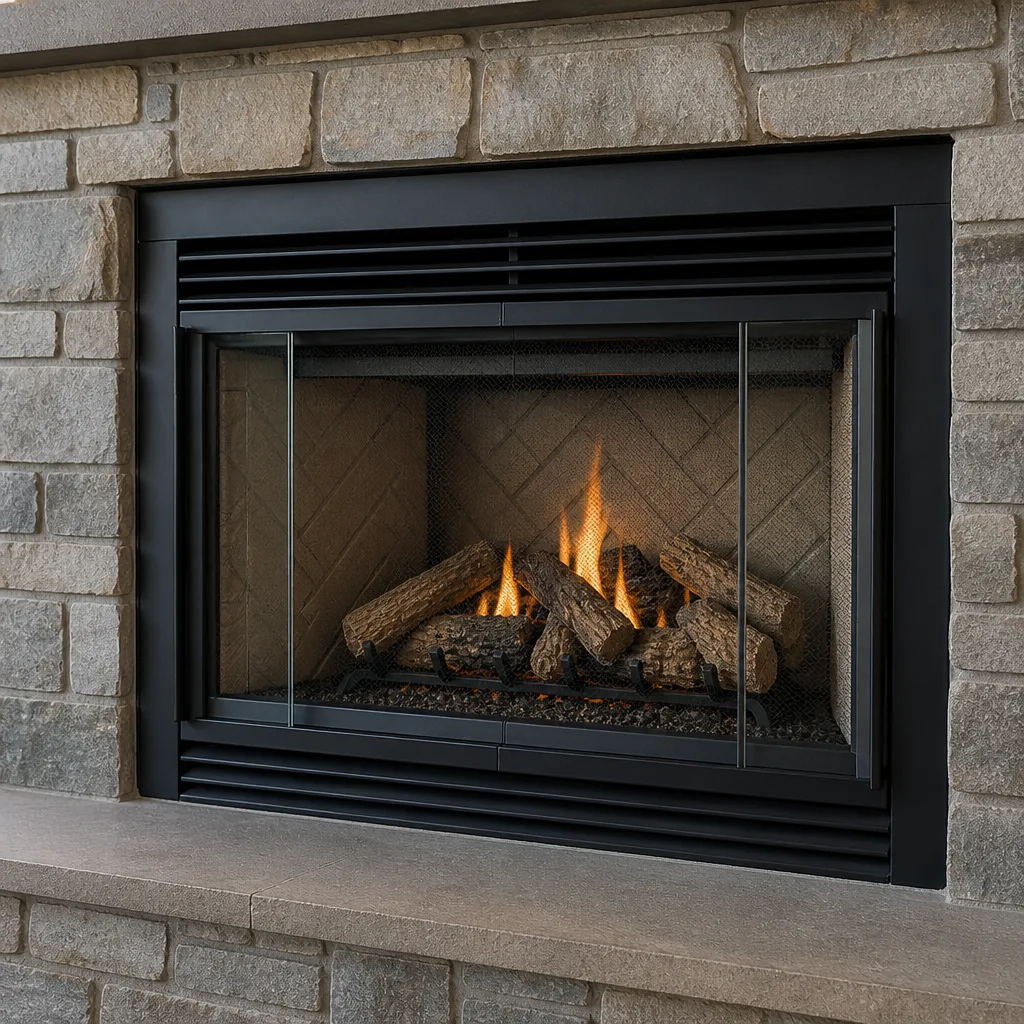 Gas fireplace service
Level 1 sweep and inspection to the NFPA 211 annual standard - flue, crown, cap, and flashing checked and photographed
Chimney sweep logs do not sweep chimneys. They loosen some creosote - which then falls where a brush and vacuum still have to collect it.
How to Hire a Chimney Cleaning Contractor in St. Louis: A Step-by-Step Guide
In Missouri, there is no state license required to call yourself a chimney sweep. That single fact reshapes how you should shop for one. The cheapest quote in your search results may come from someone whose only qualification is owning a brush, and the priciest may not be any better. What separates a surface cleaner from a genuine chimney specialist is certification, equipment, and the paperwork they hand you before anyone climbs on your roof. In St. Louis, where wood-burning fireplaces are common and winters run cold enough to keep them busy from November through March, that difference matters. This guide walks you through verifying credentials in minutes, reading a quote for what it leaves out, and comparing bids that were never quoting the same job. You’ll finish knowing exactly which questions to ask and what a real estimate looks like in writing.
Quick Answer
To hire a chimney cleaning contractor in St. Louis, verify current CSIA or NFI certification directly through the certifying body’s website, confirm the quote specifies an inspection level and names camera equipment, and insist on a written scope of work before booking. A legitimate chimney professional inspects before cleaning, documents what they find, and can repair what they uncover – not just sweep and leave. If a contractor can’t answer questions about your liner system or how they handle cracked flue tiles, you’re talking to a cleaner, not a specialist.
Styles & brands we work with
- Sweep & inspection
- Caps & crowns
- Flue relining
- Masonry repair
- Gas fireplace service
Table of Contents
- Why Hiring a Chimney Contractor in St. Louis Is Different
- The Certifications That Actually Matter
- How to Verify a Contractor in Under Two Minutes
- Red Flags in a Chimney Cleaning Quote
- Questions That Reveal a True Specialist
- What a Legitimate Estimate Includes in Writing
- How to Compare Bids Accurately
- St. Louis Climate, Housing, and Chimney Wear
Why Hiring a Chimney Contractor in St. Louis Is Different
Chimney work in St. Louis sits at an unusual intersection of old housing stock and a regulatory gap. Missouri doesn’t license chimney sweeps at the state level, which means the burden of vetting falls entirely on you. No state board tracks who’s qualified. No exam is required to hang a shingle. That’s not the case everywhere – some states do license the trade – but here, certification is voluntary, which makes it a stronger signal, not a weaker one. A contractor who pursued CSIA certification did so because they wanted to, not because a regulator made them.
The housing stock adds a second layer. St. Louis has large neighborhoods of century-old brick homes – think Tower Grove, Shaw, Benton Park, and parts of Soulard – where original masonry chimneys are still in service, often with clay tile liners that have been through a hundred freeze-thaw cycles. A modern sweep trained on newer construction may not know what to do with a flue that’s spalling, offset, or unlined altogether. Older chimneys also tend to have quirks: unlined flues from pre-code eras, parging that’s failed, mortar joints that look fine from the ground and crumble under a brush.
What you’re really hiring, then, is diagnostic judgment. Cleaning is the easy part. Recognizing that a hairline crack in a flue tile is a carbon monoxide pathway – or that creosote has glazed into a hard, flammable layer – takes training and eyes. That’s the difference between a contractor who cleans your chimney and one who tells you what shape it’s actually in. In St. Louis, where so many chimneys predate modern venting standards, that judgment is the whole ballgame.
The Certifications That Actually Matter
Two credentials come up repeatedly in the chimney trade, and only one of them is close to universal. The CSIA – Chimney Safety Institute of America – is the recognized certification standard for chimney sweeps. NFI – the National Fireplace Institute – certifies technicians in specific fuel categories: wood, gas, and pellet. A contractor holding both is a stronger hire than one holding neither, though CSIA is the credential to look for first, since it covers the full chimney system rather than the appliance.
Here’s what each one tells you:
- CSIA certification means the technician passed a written exam on chimney science, venting, and safety, and committed to a code of conduct. It also requires ongoing education to maintain.
- NFI certification comes in fuel-specific versions. An NFI Gas specialist understands venting for gas appliances; a Wood specialist understands solid-fuel systems. If you have a gas insert, look for the gas credential specifically.
- Neither certification is a state license in Missouri – and neither substitutes for insurance. Verify insurance separately.
What certification does not tell you: whether the contractor carries liability insurance, whether they’ve specialized in repairs or only cleaning, or what their actual scope of work looks like. Those are separate checks. It also doesn’t tell you their experience level. A certified technician with two years on the job is still certified. Experience matters, but certification is the floor, not the ceiling.
One more distinction worth drawing: certification applies to a technician, and a company’s certification means at least one technician on staff holds it. Ask which tech will be on your job and whether that person is certified, not just whether the company is.
How to Verify a Contractor in Under Two Minutes
You can confirm almost everything that matters without a phone call, and you should, because a badge on a website is not proof. Companies have displayed certification logos they didn’t hold. Verification takes about two minutes and covers the three things that actually affect your risk.
- Look up the CSIA credential. The Chimney Safety Institute of America maintains a searchable directory of certified sweeps. Search the contractor’s name and confirm the certification is current, not lapsed. If they claim company-level certification, confirm the listing matches the company name you’re hiring.
- Check NFI if they claim it. The National Fireplace Institute publishes a directory of certified professionals by fuel type. Confirm the specific fuel category – wood, gas, pellet – matches what you’re having serviced.
- Ask for a certificate of insurance. This is one email, not a favor. You want to see general liability coverage and, ideally, workers’ compensation. A contractor working on your roof without liability coverage means an injury there could become your problem. Ask them to send it to your email directly – not to show you one on a phone at the appointment.
Run these checks before booking, not after the truck is in the driveway. A contractor with nothing to hide will send the insurance certificate without a second ask. One who deflects, promises to bring it, or says “we’ve never needed one” has just told you something useful. We’ve seen homeowners skip this step because it felt pushy, and it’s the cheapest two minutes you’ll spend on the entire project.
If you’re in any doubt about the shop you’re calling, start with a business that puts its certifications and scope in plain language. Our Hawk Chimney Sweep team treats verification as a starting point, not a hurdle, because informed customers make better decisions for their homes.
Red Flags in a Chimney Cleaning Quote
Most bad quotes fail in the same handful of ways, and every one of them shows up before any money changes hands. You’re not looking for reasons to reject a contractor – you’re looking for evidence they know what they’re doing. Here’s what should stop the conversation.
- No inspection level named. Professional chimney work is tied to defined inspection levels – Level 1, 2, or 3 – based on what the technician is assessing and what tools are needed. A quote that just says “chimney cleaning” without specifying an inspection level is vague by design. The CSIA framework is standard: Level 1 covers an accessible visual inspection of readily accessible portions; Level 2 adds a video scan of the flue interior; Level 3 gets into opening the chimney. If the quote doesn’t name the level, ask which one you’re buying.
- No camera equipment listed. A Level 2 inspection uses a video camera run through the flue to see cracks, gaps, offsets, and buildup that a visual check from the firebox can’t reach. Any reputable contractor should have and use camera equipment. A quote with no camera mentioned means either no camera inspection is happening or they’re not telling you what you’re getting.
- No written scope of work. Verbal quotes are the most common problem. If the price only comes over the phone and there’s no document, you have nothing to hold anyone to. Written scope separates a real contractor from a brush-and-run operation.
- Price quoted before anything is seen. A chimney can’t be priced with certainty from a phone description. A firm number given before inspection is a number someone will find a way to change once the truck arrives.
- No repair capability. If the answer to “what if you find a cracked flue tile?” is “we’d refer you,” you’re hiring a cleaner, not a system specialist. That referral opens the accountability gap most homeowners never see coming.
- Unwilling to discuss credentials. A contractor who bristles at “are you CSIA certified?” is telling you what the answer is.
None of these red flags require technical knowledge to spot. They’re about whether the contractor is willing to be specific, and specificity is the cheapest sign of competence there is.
Questions That Reveal a True Specialist
The right questions separate a genuine chimney professional from a surface cleaner. And the tell is not what they know – it’s whether they can talk about your chimney as a system, not a tube that gets brushed. Ask these and listen for specifics.
“Can you explain what’s in my liner system?” A specialist will ask what kind of appliance you have and what the flue is made of before answering. Clay tile, stainless steel, cast-in-place; a fireplace insert versus an open hearth – each changes the answer. If they can’t name your flue type after looking, that’s a signal.
“How do you handle a cracked flue tile?” This is where specialists stand apart. Many sweeps can sweep but have no repair capability, so the answer is usually “we’d recommend a specialist.” A true specialist can talk through relining options, including flexible liner systems like DuraFlex for code-compliant relining, or resurfacing a deteriorating liner with HeatShield rather than tearing it out. HeatShield resurfacing is a repair method most sweep-only companies aren’t equipped to perform.
“What about the flashing and the crown?” These are the parts where water gets in. A sweep who only cleans won’t notice a failing crown or lifting flashing, and water damage to a chimney is slow and expensive. A specialist checks the top and bottom of the system and repairs what they find.
“How do you assess the flue – and with what?” Camera equipment, a proper inspection level, and a methodical top-to-bottom pass. A sweep who grabs a brush without looking first is cleaning blind.
“What if you find a blockage?” Blocked flues are a carbon monoxide and fire hazard. Anyone can say they’d clear it. A specialist will describe how they confirm the blockage and what evidence they provide when reporting it.
If you use a company with one sweep-inspect-repair capability, all of this lands in one place – the sweep, the inspection, and any repair are handled by one accountable team, not handed off. That’s a structural advantage when the job turns out to be more than cleaning. When you want the inspection and the repair under one roof, our chimney repair service covers resurfacing, relining, and masonry fixes found during the sweep.
What a Legitimate Estimate Includes in Writing
A written estimate is a contract’s first draft, and it should include enough detail that two contractors describing the same job produce comparable documents. A verbal quote is a promise; a written scope is a liability that actually protects you. Here’s what you should see on paper before you say yes.
- Inspection level and what it covers – Level 1, 2, or 3, and the specific areas being inspected. Level 2 should state that a video scan of the flue is included.
- Cleaning scope – what’s being cleaned (firebox, flue, smoke chamber, damper), and for which appliance (wood-burning fireplace, gas insert, solid-fuel stove).
- Camera inspection equipment listed – a torch isn’t a camera. The scope should name video inspection if it’s part of the job.
- Evidence provided – what report, photos, or video you receive after the inspection. If a contractor finds problems, you should be given documentation you can actually review, not a verbal warning delivered from the roof.
- Line-item pricing – the sweep, inspection, and any suggested repair priced separately, so you can see what each part costs.
- What happens if issues are found during inspection – whether the price changes and how any change is documented before work continues.
One more piece: many legitimate operations include a camera inspection and photo report with the sweep as part of the package. Ask whether yours does and get it in writing. If you can’t verify the condition of your flue, you can’t evaluate the recommendation on the other side of it. That’s not a small point – it’s the core of how to avoid paying for work you don’t need.
We hold to a flat-price sweep agreed before booking so there’s no surprise at the door. Ask the same of anyone you call. Scope in writing, price agreed up front, and documentation after. If your contractor doesn’t offer that, you’re negotiating from behind.
How to Compare Bids Accurately
This is where most homeowners make avoidable mistakes. Two contractors quote $200 and $350 for “chimney cleaning,” and one looks cheaper. But the labels hide different jobs entirely. One may include a Level 2 inspection with a camera scan and a written report; the other may be a brush job with a visual look and nothing more. You can’t compare them until they describe the same work, and one may genuinely be worth the higher number.
Here’s how to line up bids fairly:
- Hold each contractor to the same scope. Write down the sweep, the inspection level, camera use, written report, and repair availability for each bid. Compare like with like, not the bottom line.
- Separate the sweep from the inspection from any repair. A bid that lumps everything into one price hides what you’re actually paying for. Ask for the breakdown.
- Ask about repair capability for each bid. A contractor who can handle relining and resurfacing in-house doesn’t hand your job off when things get complicated. That’s worth something.
- Confirm everything’s in writing. If a bid only exists in a text message, treat it as a phone call with extra steps.
- Don’t chase the cheapest number. The lowest bid usually means the thinnest scope. Price per job by written estimate is how a professional prices; a suspiciously low lump sum is how a shortcut gets priced.
When you do the comparison this way, the cheapest quote often stops looking cheap, and the differences between bids become the information you actually wanted. If two quotes name a camera and a written report and one doesn’t, you can see the gap without knowing anything about chimney science.
St. Louis Climate, Housing, and Chimney Wear
Chimneys in St. Louis face a specific set of stresses that shapes what a contractor should be looking for. The region’s freeze-thaw cycles are the big one: water gets into masonry and flue tiles, freezes, expands, and starts cracking the liner from the inside. A crack that’s harmless until it isn’t. Over several winters, a flue with hairline fractures can open pathways that flue gases and carbon monoxide escape through. That’s why a proper inspection, and not just a brush, matters more in St. Louis than in a mild climate.
The region’s humidity matters too. Warm, humid summers followed by cold winters accelerate the deterioration of mortar joints and crowns. Homes in neighborhoods like Maplewood, Webster Groves, Kirkwood, and Affton often have chimneys that have been through decades of these swings. A contractor who knows what to look for can spot water damage early – lifting flashing, a spider-webbed crown, rust on a damper – and fix it before it turns into a rebuild.
Heating habits shape creosote, and St. Louis heats with wood as a supplemental source. That means burns are often long and slow, especially on cold nights, and slow, cool fires deposit more creosote than hot ones. A chimney that sees a lot of smoldering fires builds up a glazed layer faster than one that burns hot. An experienced sweep can read creosote buildup and tell you whether your burn patterns are creating a hazard. That’s why we sweep based on what we see, not on a calendar, and why we advise homeowners across St. Louis that burning season is the time to get checked before the first cold snap has everyone calling at once.
Our technicians have up to 12 years of experience working on chimneys in this climate, and that experience matters: knowing what to look for on an older St. Louis flue is not the same as knowing what to look for on new construction. If you’re ready to start with a proper sweep, our chimney sweep describes what a visit includes from cap to firebox.
Common Mistakes to Avoid
- Hiring the cheapest quote without checking credentials. In Missouri, no license is required to sweep a chimney, so a low price may mean no certification and no inspection. Ask for CSIA verification before you book.
- Accepting a verbal quote. Two sentences on the phone is not a scope of work. Without a written document naming the inspection level and what’s included, you have no recourse if the job changes.
- Assuming a sweep is an inspection. Cleaning removes creosote; inspection finds cracks, blockages, and defects. A sweep without a camera scan is cleaning blind.
- Not asking about repair capability. If your contractor can only clean, a failed liner means a second contractor and a gap in accountability. Asking “what if you find a cracked flue tile?” gets you the answer before you commit.
- Skipping the insurance check. Roof work carries real risk. Confirm liability coverage in writing rather than accepting a verbal yes.
- Scheduling only when things go wrong. A flue that hasn’t been swept in years can harbor a dangerous creosote layer that doesn’t show up as a symptom until it’s a fire. Routine inspection catches it early.
- Ignoring the top of the system. Crown, flashing, and cap are where water gets in, and water is what destroys chimney masonry. A contractor who only looks up the flue and not down the chimney misses half the job.
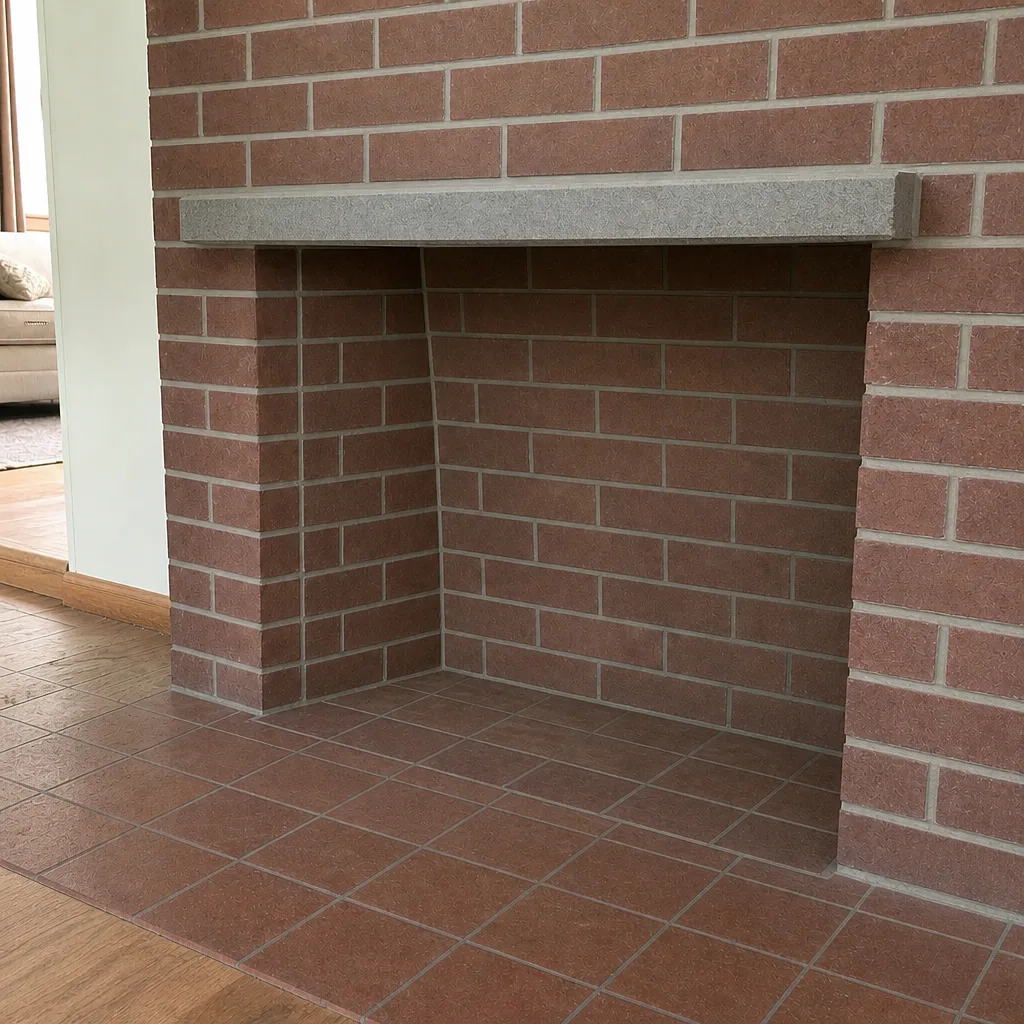
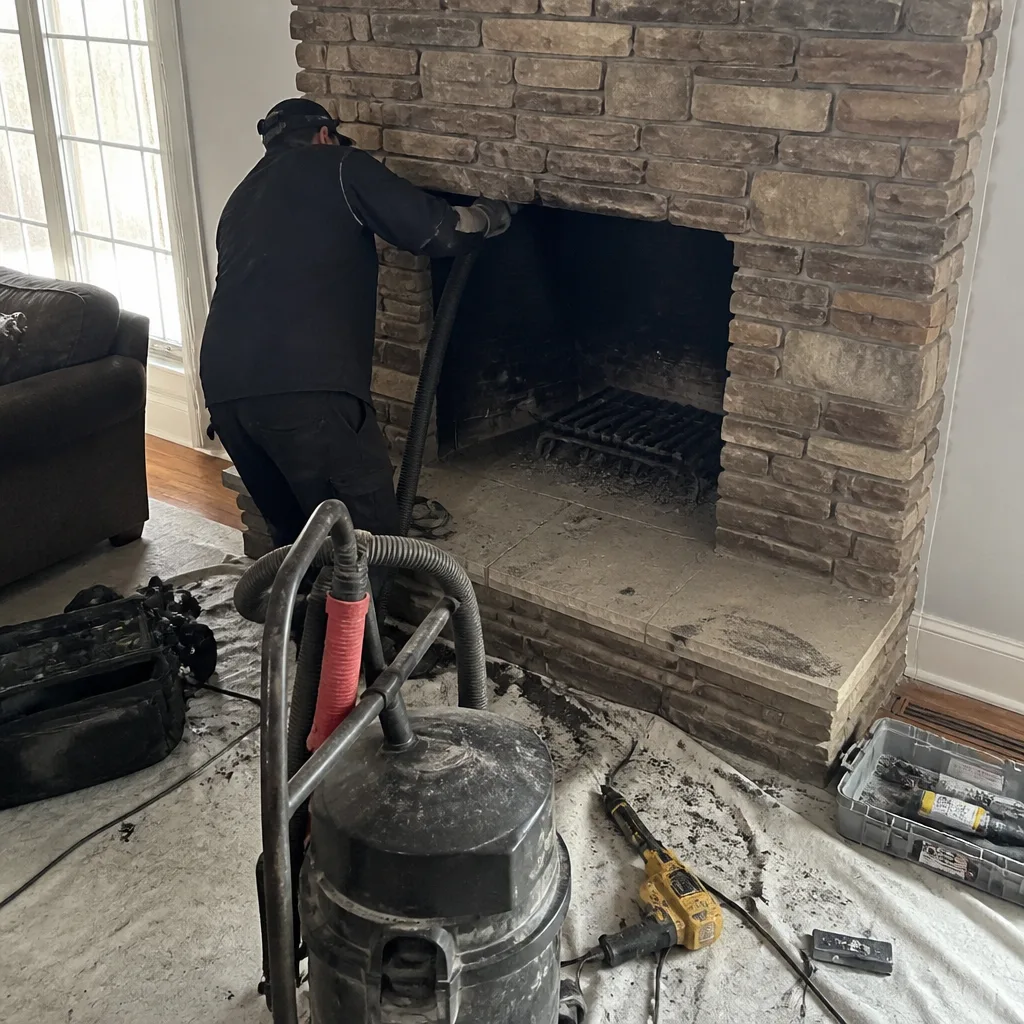
See the difference
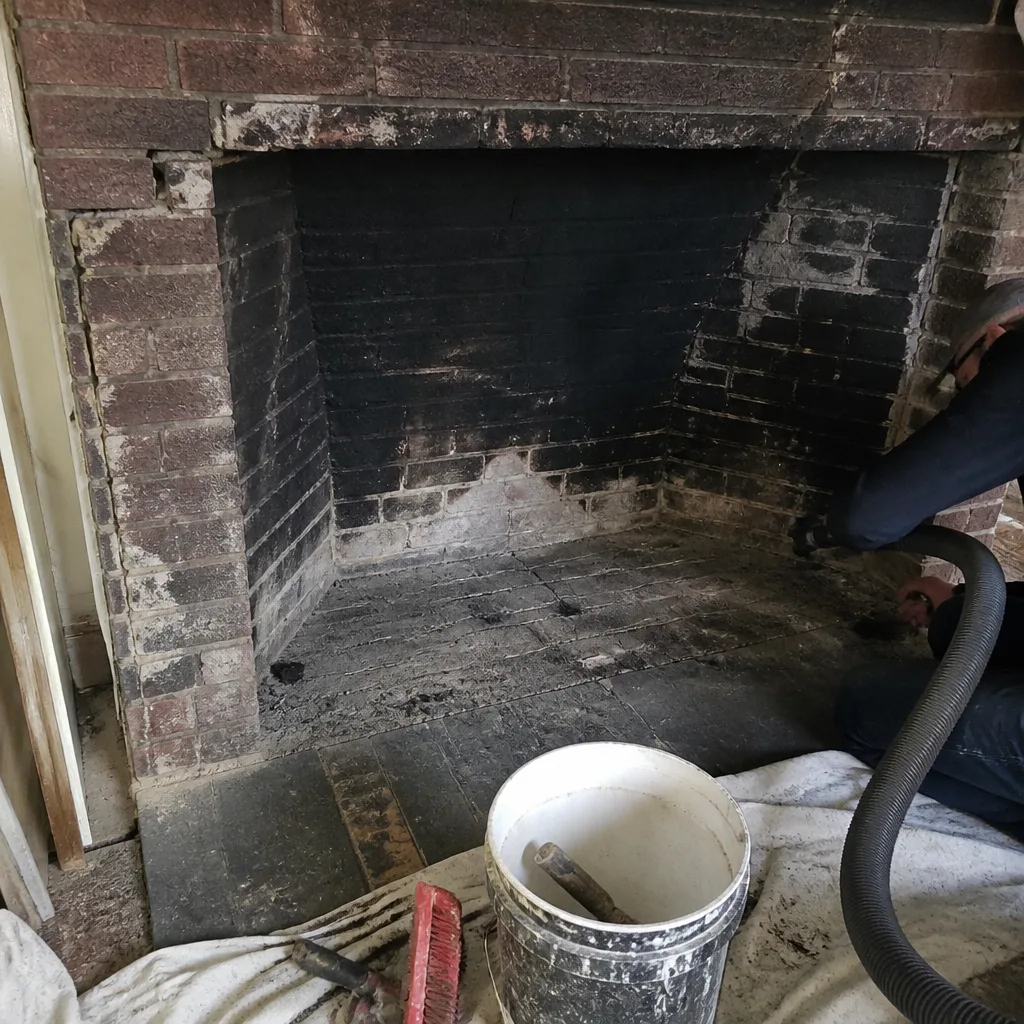 Before
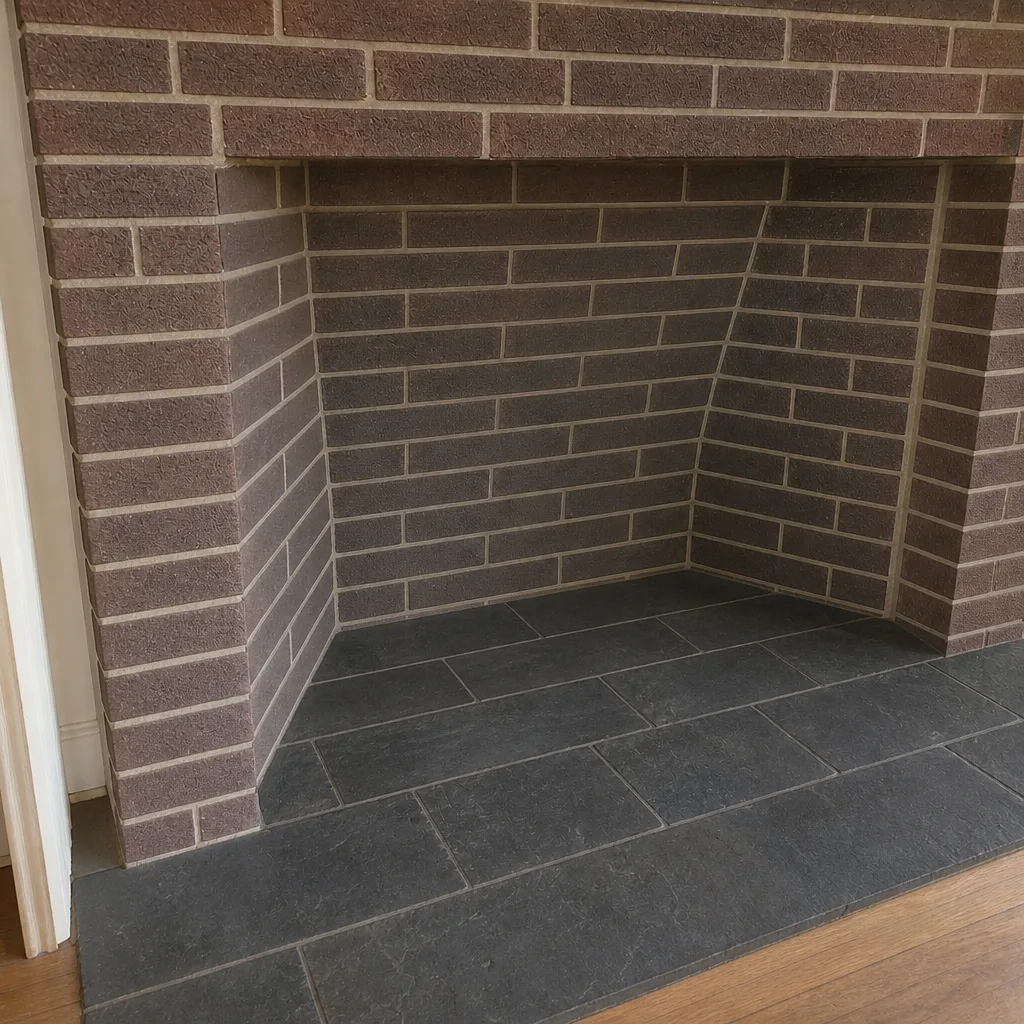 After
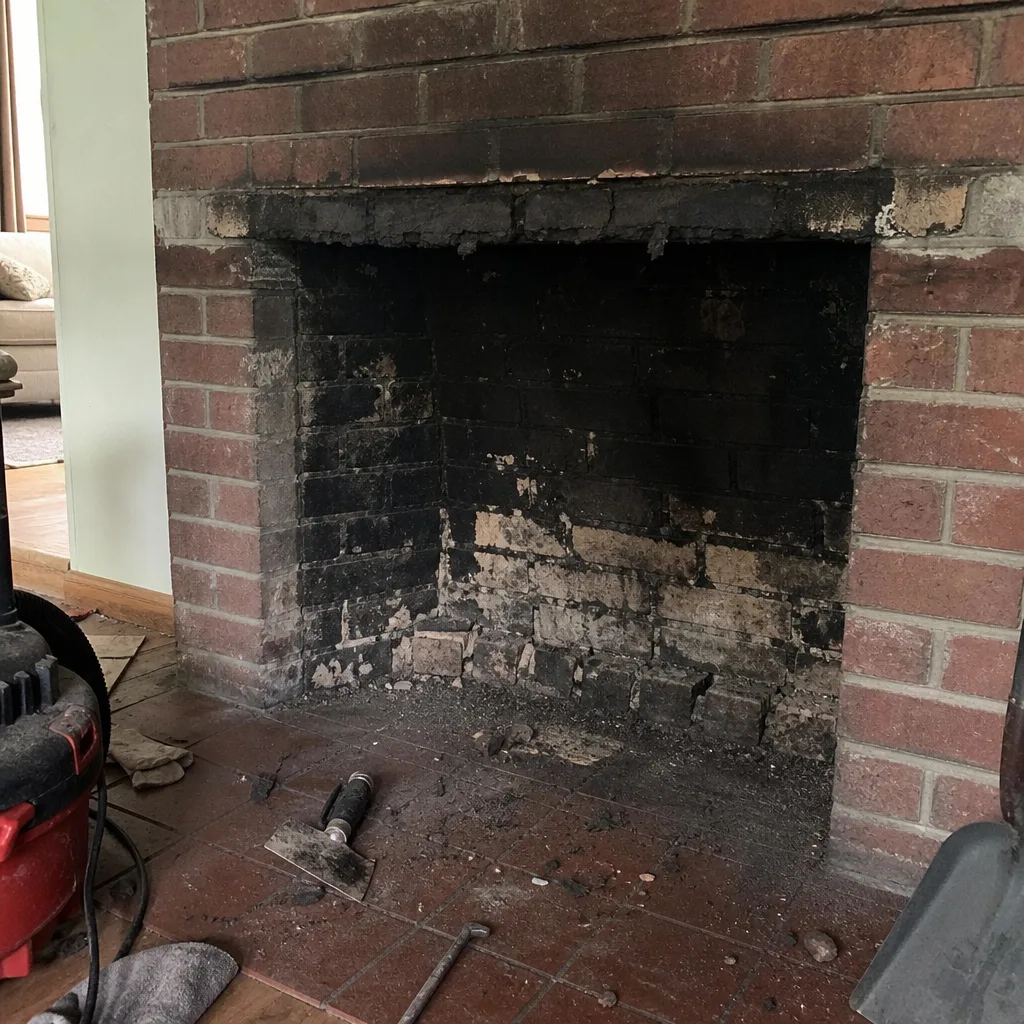 Before
 After
 Before
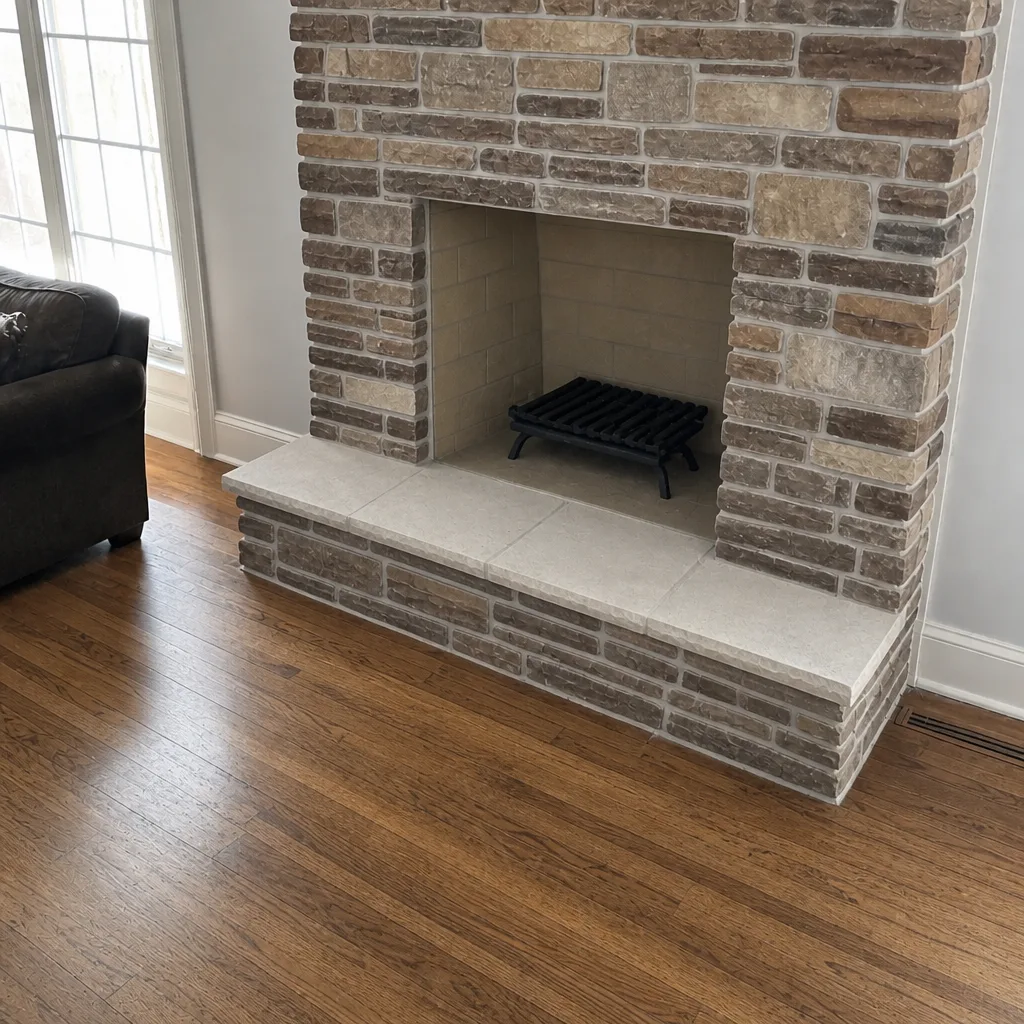 After
When to Call a Professional
Some chimney situations can wait a season. Others can’t. Call a professional now if you’ve had a chimney fire, if you smell smoke in the house when the fireplace isn’t burning, if there’s a persistent chemical or rotten-egg odor (carbon monoxide risk), or if the firebox has visible cracks. Call before the heating season if the chimney hasn’t been swept in over a year, if you’ve noticed creosote buildup or glazing, or if you’re moving into a home with an unfamiliar chimney. Call if birds or animals have nested in the flue, or if the mortar joints around the crown or flashing look worn from the ground.
Also call if you’re unsure. An inspection that finds nothing wrong is a cheaper outcome than a chimney fire that starts because a cracked liner went unseen. Hawk Chimney Sweep offers free estimates in St. Louis – call (866) 596-7310. We answer 24/7. Fast dispatch from 7am to 7pm, Sunday through Friday. We’ll tell you plainly what we find, show you the evidence, and let you know when work can safely wait.
Frequently Asked Questions
A chimney sweep in St. Louis typically runs in the low-to-mid hundreds of dollars for a standard wood-burning fireplace, and the written estimate sets the final price. A sweep that includes a Level 2 camera inspection and a photo report costs more than a bare brush job, and you should compare quotes on the same scope. Call (866) 596-7310 for an exact quote – estimates are free.
Not unless the flue is actually compromised: cracked tiles, gaps, spalling, or a missing liner where one should be. A camera inspection shows the condition of the flue, and a specialist should be able to show you what they see before recommending relining. If the liner is sound, a proper contractor will say so. If it’s not, options include resurfacing a deteriorated liner with HeatShield or installing a flexible liner system like DuraFlex. Call (866) 596-7310 for an exact quote – estimates are free.
Most wood-burning chimneys should be swept about once a year, more often if you burn frequently or notice heavy creosote buildup. The right interval depends on how much you burn, how the fire burns, and what the inspection finds. A sweep trained to read buildup can tell you what your burn patterns are leaving behind. Call (866) 596-7310 for an exact quote – estimates are free.
Creosote accumulates and, when it glazes into a hard layer, becomes fuel for a chimney fire; a cracked or blocked flue also lets carbon monoxide enter the home. Neither shows up as an obvious symptom until it’s a serious event, which is why routine inspection matters more than symptoms. Skipping a sweep is not a guarantee of trouble, but it’s an unnecessary risk. Call (866) 596-7310 for an exact quote – estimates are free.
Look up the contractor’s CSIA certification in the Chimney Safety Institute of America’s directory and confirm it’s current; check NFI certification by fuel type if they claim it. Also request a certificate of insurance by email. These three checks take about two minutes and tell you more than any website badge. A contractor who can’t provide them is not one to hire.
They can when you hire a specialist with repair capability rather than a sweep-only operation. Many chimney companies clean but don’t repair, so a discovered liner crack means a referral and a second contractor. We handle sweep, inspection, and repair together, including resurfacing and relining, so the person who finds the problem is the one accountable for the fix.
The Bottom Line
Hiring a chimney contractor in St. Louis comes down to verifying what a contractor actually is, not what their website says they are. In a state with no licensing for the trade, CSIA certification, insurance, a named inspection level, camera equipment, a written scope, and genuine repair capability are the things that separate a specialist from a person with a brush. Compare bids on scope, not on the bottom line, and insist on documentation you can review. If you’re ready to start, call (866) 596-7310 for a free estimate. We answer 24/7. Fast dispatch from 7am to 7pm, Sunday through Friday. The written estimate sets the final price, and nothing gets recommended without evidence you can see for yourself. We’ll tell you when it can wait, too.
Written by the team at Hawk Chimney Sweep.