
Last updated November 15, 2026
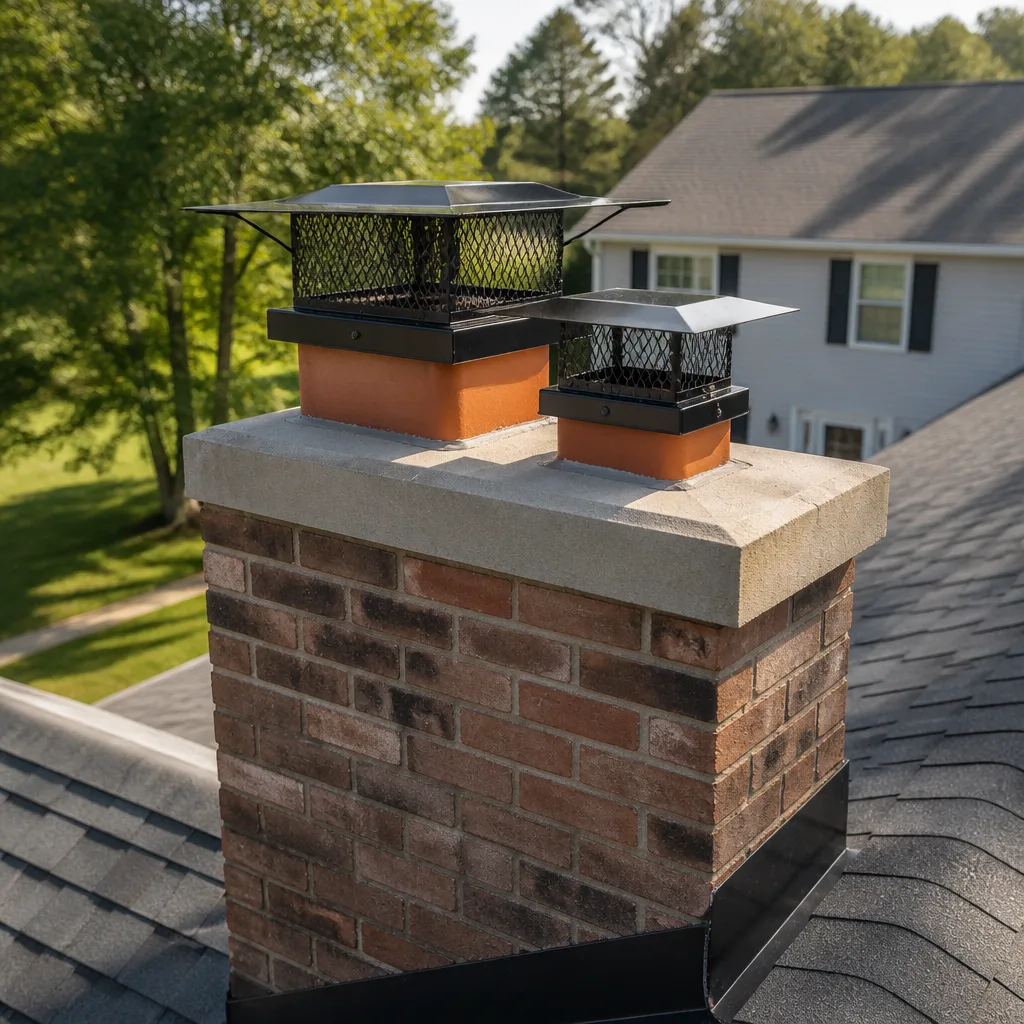 Sweep & inspection
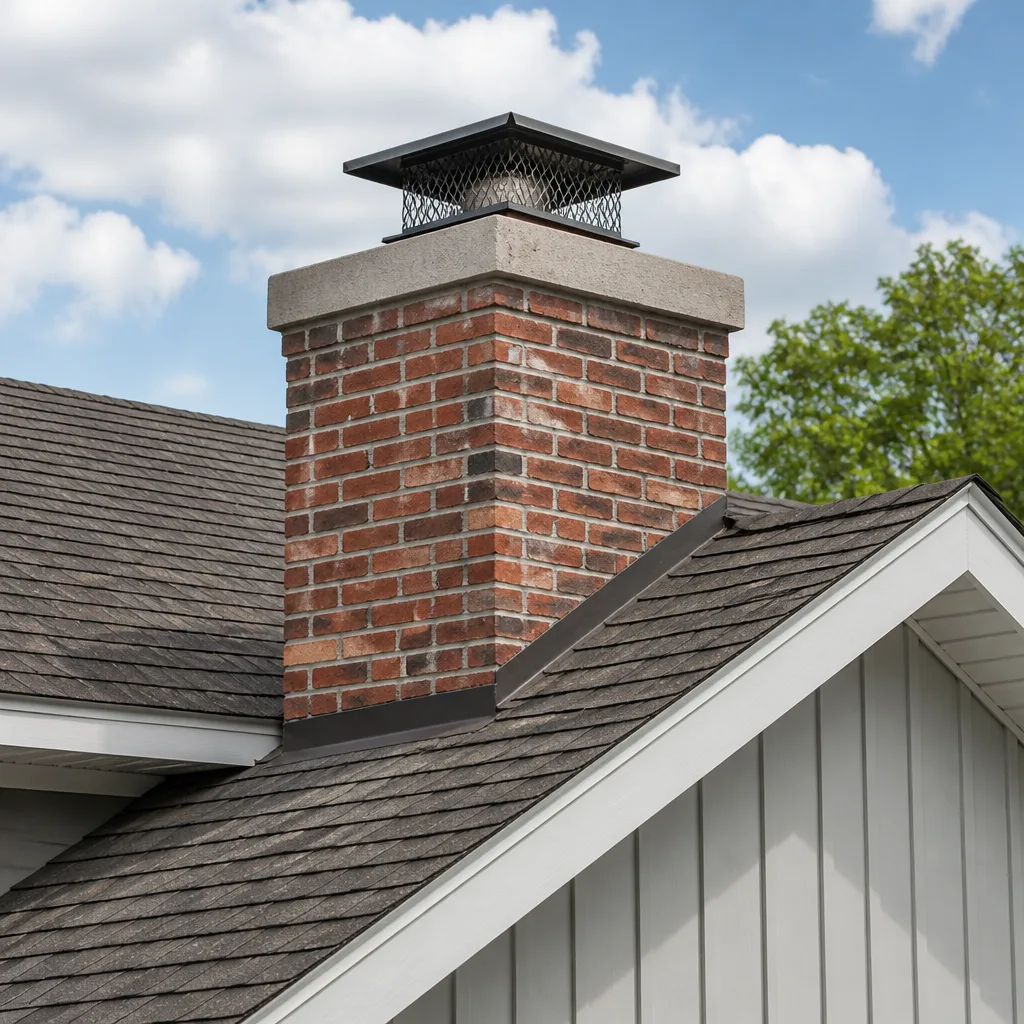 Caps & crowns
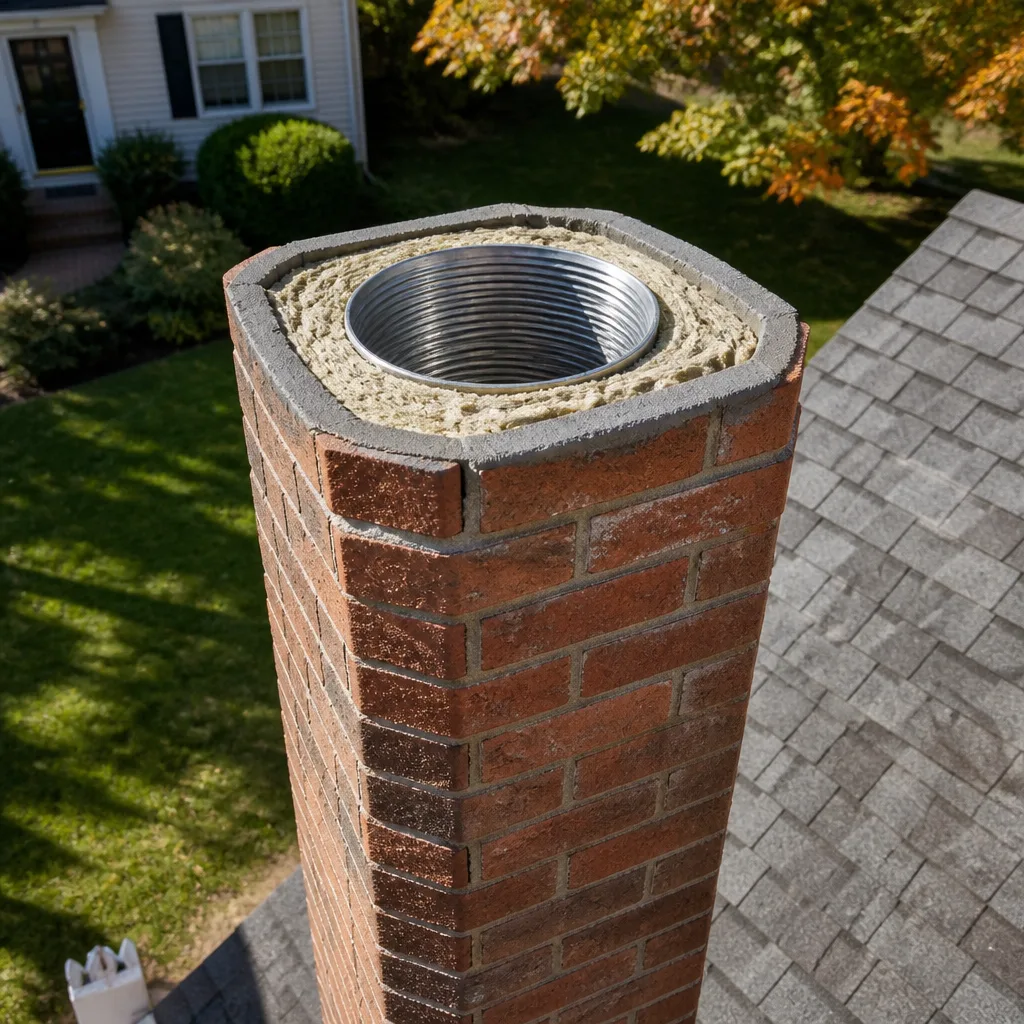 Flue relining
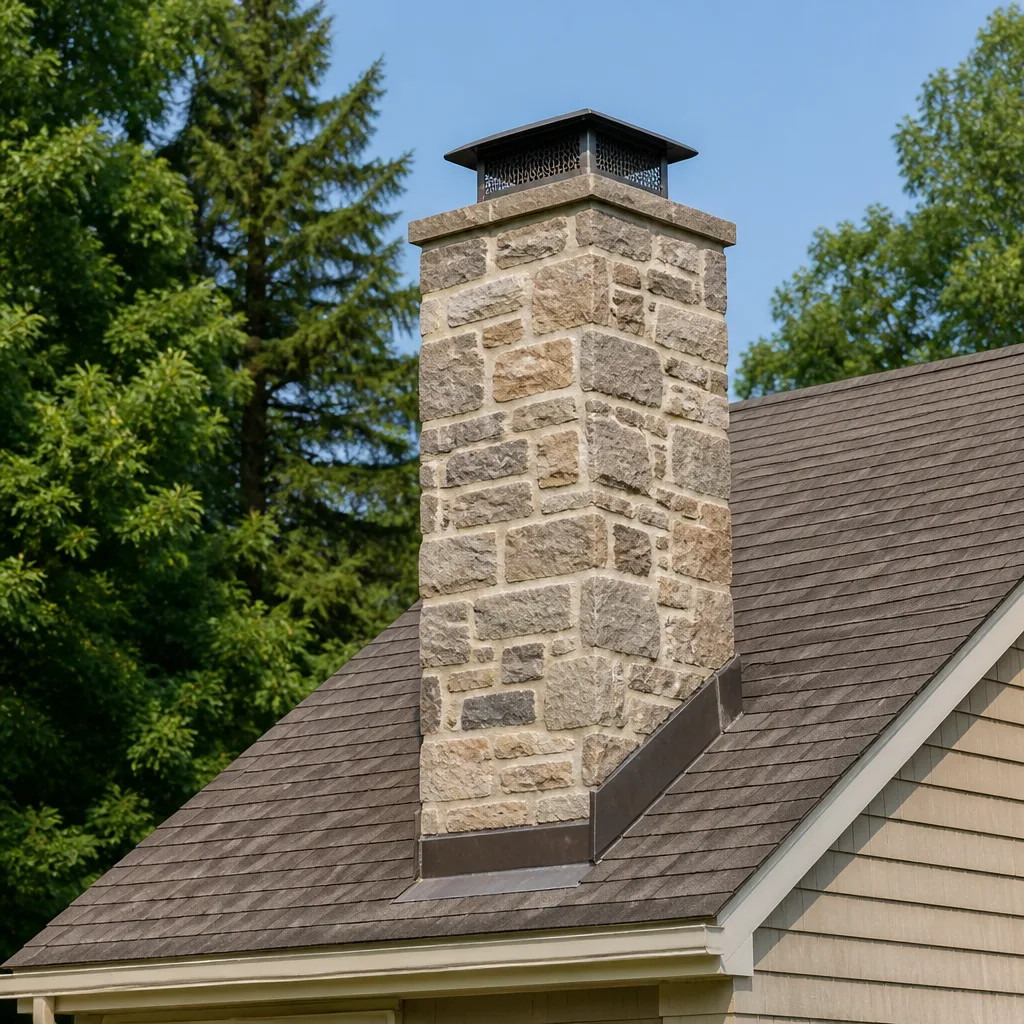 Masonry repair
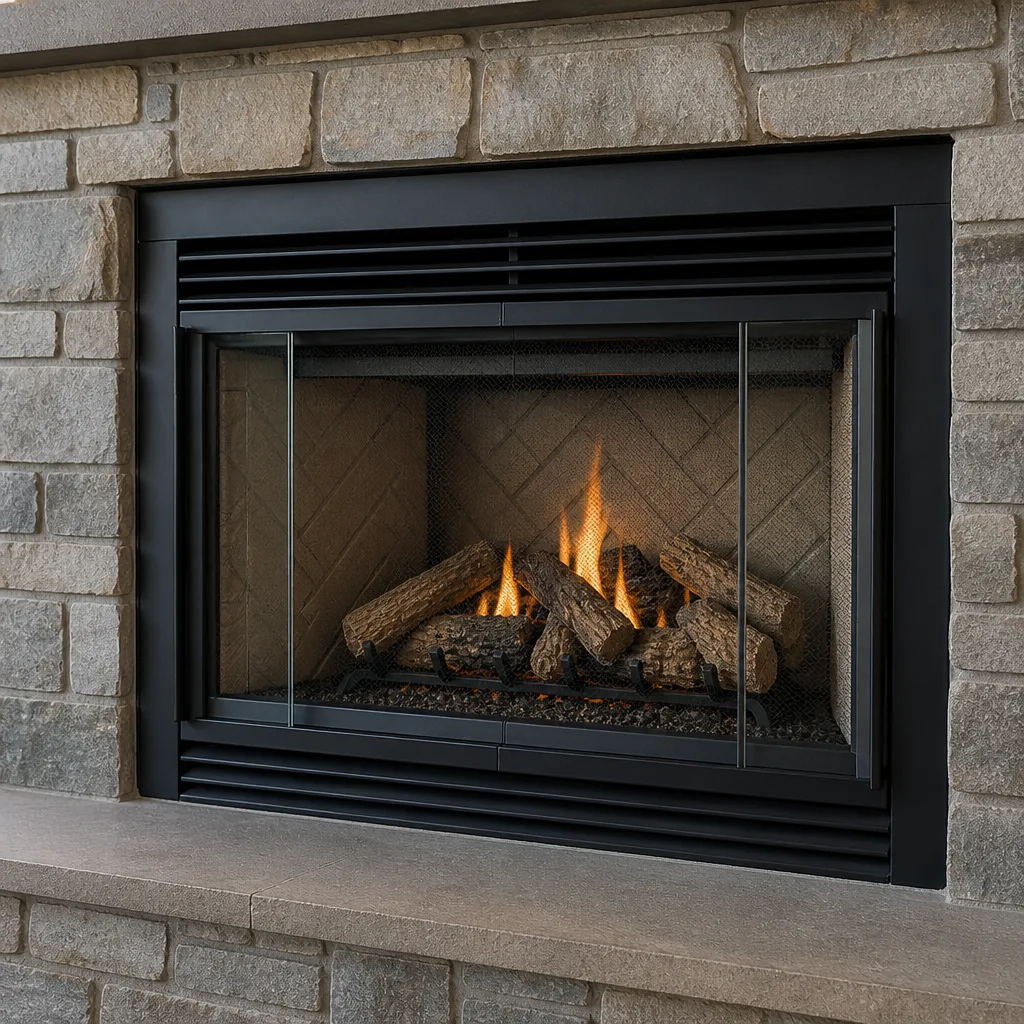 Gas fireplace service
Level 1 sweep and inspection to the NFPA 211 annual standard - flue, crown, cap, and flashing checked and photographed
Chimney sweep logs do not sweep chimneys. They loosen some creosote - which then falls where a brush and vacuum still have to collect it.
Chimney Sweep Troubleshooting in St. Louis: Common Problems and How to Fix Them
If your fireplace smokes into the room every time the wind shifts from the west, that’s not a draft problem. It’s a pressure problem, and it has as much to do with how your house is sealed as with what’s inside the flue. Most people assume a smoky fireplace means a dirty chimney, so they book a sweep, the sweep cleans it, and the smoke comes back on the next windy night. The reason is simple: the symptom gets treated and the cause never gets found. In a St. Louis house, the cause is usually one of a handful of specific failures, and each one announces itself differently if you know what to listen for. This guide maps symptoms to components, separates what you can check yourself from what needs a camera, and explains why the freeze-thaw cycle here causes problems that show up as draft trouble long before they show up as damage.
Quick Answer
Most chimney problems in St. Louis trace back to one of five causes: a flue blocked by creosote or debris, a cracked or spalling liner letting air and moisture through, negative pressure from a tightly sealed house, a damaged crown or flashing letting water in, or a cap that’s clogged, missing, or the wrong size. Diagnosing which one you have usually takes less than an hour for someone with the right equipment. The fix depends entirely on which cause is present, which is why cleaning alone so often fails to solve a smoking or odor complaint.
Styles & brands we work with
- Sweep & inspection
- Caps & crowns
- Flue relining
- Masonry repair
- Gas fireplace service
Table of Contents
- Why Does My Fireplace Smoke Into the Room?
- Negative Pressure: The St. Louis Problem That Mimics a Dirty Flue
- How St. Louis Freeze-Thaw Cycles Crack Liners and Spall Mortar
- Why Does My Chimney Smell After Rain?
- What Do Chimney Stains and Efflorescence Actually Mean?
- What You Can Diagnose Yourself vs. What Needs a Camera Inspection
- When Resurfacing Beats Relining
- Reading Creosote: What the Buildup Tells You About How You Burn
Why Does My Fireplace Smoke Into the Room?
Smoke rollback means the chimney isn’t pulling. A chimney works on a simple principle: warm exhaust is lighter than cool outside air, so it rises, and fresh air is drawn in behind it to replace it. Anything that interrupts that rising column, or that lets the room out-compete the chimney for air, produces smoke in the room. The trick is knowing which interruption you have, because the weather conditions that trigger the rollback are a strong clue.
Here’s how the symptom patterns usually break down:
- Smokes on start-up, then settles. Cold flue. The masonry is at outdoor temperature, so the first column of warm smoke hits a cold pipe and stalls. Warming the flue before lighting a fire addresses this.
- Smokes whenever the wind comes from the west in St. Louis. Exterior chimney stack in the pressure shadow of the house, or a stack that’s too short relative to the roofline. Wind from a specific direction suggests a pressure or height issue, not a blockage.
- Smokes constantly, worse over time. This is the classic blockages pattern. Creosote accumulation, a bird’s nest, a collapsed liner section, or a debris pile at the smoke shelf.
- Smokes only when another appliance runs. When the kitchen vent hood or a bath fan kicks on, the house pulls makeup air from the easiest path available, and if that path is the fireplace, smoke comes in.
- Smokes after you upgraded the house. New windows, new insulation, spray foam in the attic, a new furnace. All of these tighten the envelope, and a tighter envelope starves a chimney that used to have plenty of air.
That last item is worth dwelling on. A working chimney sweep solves the creosote and debris cases completely, and a thorough sweep combined with a proper inspection of the flue solves more. But when the flue is clean and open and the fireplace still smokes, the answer lives in the pressure balance of the house, and squeezing a brush through the flue won’t touch it. That’s the diagnosis most sweeps miss, and it’s the one that matters most in a St. Louis house renovated in the last two decades.
Negative Pressure: The St. Louis Problem That Mimics a Dirty Flue
Negative pressure means the air pressure inside your home is lower than the pressure outside. Nature hates a vacuum, so outside air pushes in through every gap it can find, and if the biggest gap is the fireplace opening, the smoke column gets pushed backward. In a leaky old house this rarely happens because the house itself supplies the replacement air. In a house sealed up tight for heating efficiency, it happens regularly.
The pattern in St. Louis is distinctive because so much of the housing stock has been tightened. A bungalow in Tower Grove with original single-pane windows leaked plenty of air in 1960. Restored and insulated with modern materials, that same bungalow could now starve the fireplace. Modern construction on infill lots in the city has the same effect, because new houses are built to tighter air infiltration standards than the old ones ever were.
Here’s how to tell negative pressure from a dirty flue without any equipment:
- Light a small test fire with an open window near the fireplace. If it draws cleanly with the window cracked and smokes with it shut, the problem is pressure, not blockage.
- Turn on every exhaust fan in the house (kitchen hood, bath fans, dryer) and watch the fire. If the draw worsens, the house is losing makeup air faster than the chimney can draw.
- Crack a door to the basement or the attached garage. If the fire draws better, the problem is the air supply, and the fix is a dedicated combustion air source or a chimney fan, not a cleaning.
- Check the return duct placement. If the furnace air handler or the main return sits within a few feet of the fireplace opening, it can pull air off the firebox itself.
- Watch the barometric pressure. Fires that smoke on low-pressure days and burn fine on high-pressure days are almost always describing an air supply problem.
The fix depends on the exact setup, but the common solutions are a dedicated outside air intake ducted to the firebox, a top-sealing damper that prevents cold air from dropping down the flue when the fireplace is idle, a chimney fan at the stack for extreme cases, or addressing the return air duct location. In our experience, the top-sealing damper is the single most effective change for a St. Louis house dealing with a Western-wind rollback issue, because it eliminates the cold air column and stops the pressure inversion on the firebox.
How St. Louis Freeze-Thaw Cycles Crack Liners and Spall Mortar
St. Louis sits in a climate band where the temperature crosses the freezing line repeatedly through the winter. Every time water gets into the masonry and then freezes, it expands. Then it thaws, the water runs a little deeper, and the next freeze expands it again. That cycle is what makes mortar joints spall and clay flue tiles crack. The damage doesn’t always show where you’d expect, and that’s the part most homeowners miss.
Clay flue tiles are a particularly good victim for freeze-thaw. Each tile is a short segment stacked with joints between them, and a chimney with a clay liner exposed to the elements (no cover, damaged crown, cracked cap) will take on water through the tile joints. When the water freezes, the tile itself can expand and spall on the inside face or along the joints. From outside the chimney, everything looks fine. From the firebox looking up, the liner shows chunked-out gaps between tiles, a hairline crack running vertically, or a section of material that’s begun to delaminate.
What makes that failure structure so tricky is that a cracked liner doesn’t produce a blocked flue. It produces a draft problem. The gap between tiles lets cold air in and exhaust out through the gap instead of out the top, which saps the draft and makes the fireplace smoky. In the worst case, exhaust from a furnace or water heater that shares the flue can back up into the house rather than rising out. That’s a carbon monoxide event, and it’s why we treat cracked liners as a safety issue, not an efficiency one.
Where you see the freeze-thaw damage in St. Louis:
- Chimneys that face north or west, and don’t get sun to dry them out between freezes.
- Stacks whose crown has lost its slope or cracked, letting water run down the flue rather than off the top.
- Chimneys with no cap at all, or a cap with damaged mesh, so rain goes straight in.
- Homes on the hillier sections where roof runoff hits the stack directly at a bad angle.
A Hawk Chimney Sweep inspection with camera equipment will show you the liner condition you can’t see from the firebox. When the damage is a crack in the clay liner, there are two paths: install a new liner or reline the existing one, or resurface the flue interior to seal it. The right answer depends on the extent of the damage and how it happened.
Why Does My Chimney Smell After Rain?
A chimney that smells after rain has water getting into the system, and the smell is the water reacting with something already in there. Two things produce organic chimney odor: creosote absorption and mold growth. Both get much worse with added moisture, and both are diagnostic signs of specific water-entry paths.
When creosote, especially the gummy, glazed third-degree kind, absorbs water, it releases a strong acrid smell that a lot of people describe as barbecue and a lot describe as tar. That’s a distinct problem from mold, which smells more like a damp basement. Both mean the chimney is wet inside and staying wet. The question to answer is where the water enters.
Water mostly enters through four routes. It comes down the flue because there’s no cap and no top-sealing damper. It comes through a cracked crown or a spalled crown requiring repair. It comes through failed flashing at the roof penetration. And it seeps through the brick itself if the exterior has gone porous or the brick and mortar joints have lost their seal. Each one has a different repair, and the odor gets worse for as long as any of them is present.
Often the correct order of operations is: diagnose the entry points, address the water intrusion first (crown, cap, flashing, top-sealing damper), then sweep out the creosote, then if needed do a simple bi-carbonate treatment to eliminate the smell. Getting the order wrong wastes effort. Sweeping a chimney with a leaking crown just removes creosote that will build back up over the next wet season. The best diagnostic is a Hawk-eyed inspection of the roof-level components and the flue interior, not just a look down the stack.
What Do Chimney Stains and Efflorescence Actually Mean?
Stains on the chimney face are how a chimney tells you what’s happening inside. White powdery residue on the exterior masonry is efflorescence, and it means water is passing through the brick and depositing mineral salts on the surface as it evaporates. It’s not cosmetic. It’s a moisture problem showing itself. Dark brown or black staining is usually creosote or smoke finding its way through a failure point, and a rust-colored stain often points to a corroded metal component inside the system.
Here’s how to read what you’re seeing:
- White, powdery surface. Water migrating through the masonry from the flue side or from a leaking crown. Check for a failing crown first.
- White, crusty deposit at the mortar joints. Salts crystallizing out of the mortar itself. Often a sign the crawlspace below the hearth is damp, or the flashing isn’t shedding water.
- Rust streaks. Usually a metal damper, a steel cap, or a metal liner component gone porous. This one is a professional check, because the component is inside the system.
- Dark streaks near the firebox opening. Smoke moving out of the firebox rather than up the flue, which points back to a pressure or draft problem.
- Bubbling or flaking paint on the chimney breast inside the living room. Moisture wicking through the brick. Get this one looked at quickly, because the wall-side damage gets expensive.
None of these is a job for a pressure washer alone, which a lot of homeowners try first. Power-washing a porous chimney with efflorescence can drive water deeper into the masonry and accelerate the freeze-thaw cycle that’s already causing the problem. Staining tells you where water is entering, and the fix is to stop the entrance and then correct the surface, usually with a breathable sealant rated for masonry.
What You Can Diagnose Yourself vs. What Needs a Camera Inspection
Some chimney problems are viewable from the firebox with a flashlight. Others are invisible without a camera running through the flue. Knowing which is which saves you from both unnecessary calls and real hazards. In our experience, the most common mistake is treating a camera-necessary problem as a DIY one.
You can check these yourself, safely, without standing on a roof and without climbing anything:
- The firebox floor and back wall, for cracks, missing bricks, or loose mortar.
- The damper. Open and close it fully. If it won’t, or if the plate is warped, note it. A stuck-open damper is a common cause of cold air running down the flue, and a stuck-closed one is a cause of smoke rollback.
- The smoke chamber area just above the damper (looking up with a flashlight), for obvious soot build-up or visible debris.
- Whether the cap and the top of the flue are visible at all from the ground with binoculars. Cap presence and general condition are the easy checks from a distance.
- The fire in the firebox, watching the flame and the smoke pattern to identify whether the draw is weak or the pressure is wrong.
These need a camera inspection, and a trained professional, because the failure points aren’t visible from below:
- Cracks in the clay tile liner, especially at the joints between tiles.
- Spalling inside the flue and delamination of a prefabricated metal liner.
- Hidden obstructions (bird’s nests, broken tiles, a partial collapse) above the first tile joint.
- Creosote glazing at the top of the flue that isn’t visible from the firebox.
- Crown, flashing, and cap condition on the roof, which requires a roof-level check.
- Whether the liner is the correct size for the appliance you’re running.
That second list is the reason a sweep and an inspection aren’t the same service. The sweep cleans the flue. The inspection documents what’s there with photo evidence and a report, and the technician’s job is to tell you what the camera shows without a sales pitch. We offer the camera inspection as part of a standard service call, and we tell you what’s actually wrong rather than what would be convenient to fix. If nothing needs doing, we say so.
When Resurfacing Beats Relining
When the flue liner has deteriorated, there are two repair paths. The heavier one is relining: installing a new flexible stainless liner inside the existing chimney. The lighter one is resurfacing: applying a specialized refractory coating to the inside of a clay flue with cracks or spalling, sealing the flue interior without removing anything. Both are repairs to the same problem, and the right choice depends on the extent of the damage.
HeatShield is the resurfacing product we use for cracked or spalling flue tiles. A flexible applicator foam is pulled through the flue, the coating is applied to the interior, and the result is a smoother, sealed flue interior over the existing clay tile. The advantage over relining is that it preserves the original flue dimensions, it works through the existing structure without demolition, and for a liner damaged by freeze-thaw joint cracks it produces an interior surface that won’t take on water the same way. That last point matters in St. Louis specifically, where freeze-thaw is the primary cause of liner damage to begin with.
Resurfacing isn’t the right answer for every liner. If the flue has major spalling with missing material, a partial collapse, or has lost more than a small percentage of its structural integrity, a full reline with a DuraFlex flexible liner system is the safer repair. The right way to decide is with a camera inspection that documents the exact extent and location of the damage. When the failure is a vertical crack or a compromised tile joint, resurfacing is usually the correct repair. When the flue has already dropped material or lost significant cross-sectional area, relining is the answer. A good inspector shows you the evidence and explains which path the evidence supports.
The advantage to you is that this is one company making the call. The sweep, the camera inspection, and the resurfacing or relining repair are handled by the same team. There’s no handoff from a sweep crew to a separate relining contractor who then has to re-diagnose what the sweeps found. That continuity makes it harder for a bad recommendation to slip through without being challenged.
Reading Creosote: What the Buildup Tells You About How You Burn
The kind of creosote in your flue is a report card on how you’ve been using the fireplace, and on whether the chimney is sized and installed correctly for the wood you’re burning. There are three grades, and each one behaves differently.
- First-degree. A thin sooty dust that brushes off easily. Typical of consistent, hot-burning fires. This is what a sweep removes in a single pass.
- Second-degree. Flaky, crusty deposits. Forms after a season or two of mixed burning temperatures, especially slow, smoldering fires. Removes with a sweep but takes more effort, and the flue is often the clue that the burning habits need to change.
- Third-degree. Glazed, hardened, tar-like deposits. Forms when the fire is regularly burned cool, which happens when the wood is too wet, the flue is too cold, or the fire is left to smolder overnight. This is the state most often associated with chimney fires, and it does not come off with a standard brush.
If you’re seeing third-degree creosote, the fix involves both the removal and the cause. Controlled hot burning, dry wood tested with a moisture meter (ideal is roughly 20% or less, though we say “well-seasoned and dry” for practical purposes), and avoiding slow overnight burns all help. If the flue perpetually builds third-degree creosote in one spot, it usually means that spot is cold, which usually means the liner is damaged there or the chimney is on an exterior wall. A camera inspection finds the cold spot.
Common Mistakes to Avoid
- Burning on a smoldering fire because it’s “efficient.” Slow, cool fires are exactly how third-degree creosote forms. St. Louis’s mid-winter weather invites all-day low fires, and that’s the pattern that produces it. A hot fire and dry wood are the better long-term choice.
- Sweeping instead of inspecting. Cleaning a chimney with a cracked liner just means you can see the crack better. If there’s a smoking problem or a persistent odor, ask for a camera inspection, not just a brush.
- Putting a decorative cap on a flue that needs a real one. A decorative cap is there for style, not to keep water out or keep birds from nesting. In St. Louis, a proper cap and top-sealing damper is the difference between a dry chimney and a wet one. This is a small fix that prevents an expensive one.
- Trying to solve smoke rollback with a taller flue. Raising the chimney can help, but only if a height issue is actually the problem. If it’s negative pressure from the house, a taller flue just makes the pressure imbalance worse and costs a lot to do.
- Sealing a brick chimney with the wrong product. Portland-cement-based sealants and some paints trap moisture inside the brick and accelerate freeze-thaw damage. Use only a breathable masonry sealant, and only after the water entry has been corrected.
- Calling a sweep for a problem that’s actually a house problem. If the smoke pattern tracks the kitchen vent fan or the furnace, the fix may be combustion air, not chimney work. Getting a technician who understands the whole system, rather than just the flue, produces a real answer instead of a repeat visit.
- Waiting for the first cold snap to book. In St. Louis the first hard freeze shows everyone’s chimney problem at the same time, and the demand squeezes the calendar. The fall is the better moment.
See the difference
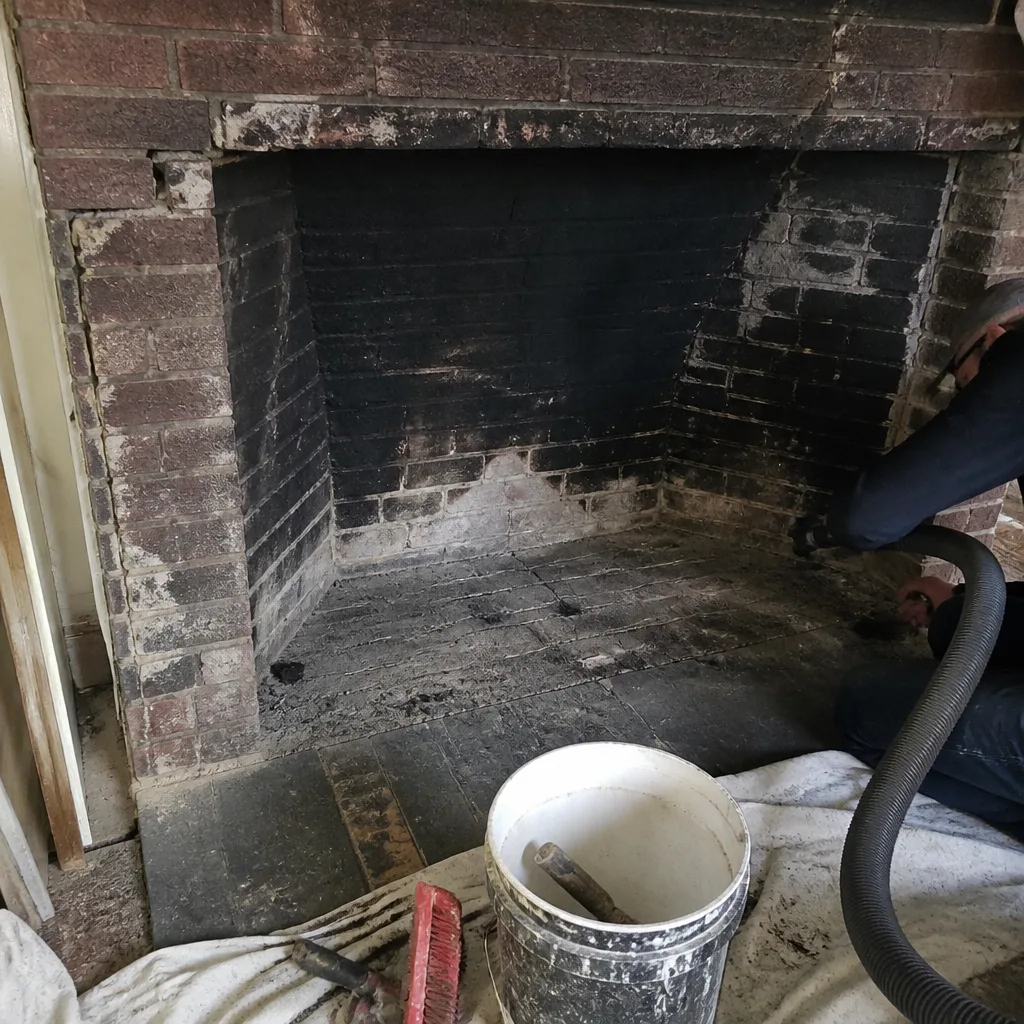 Before
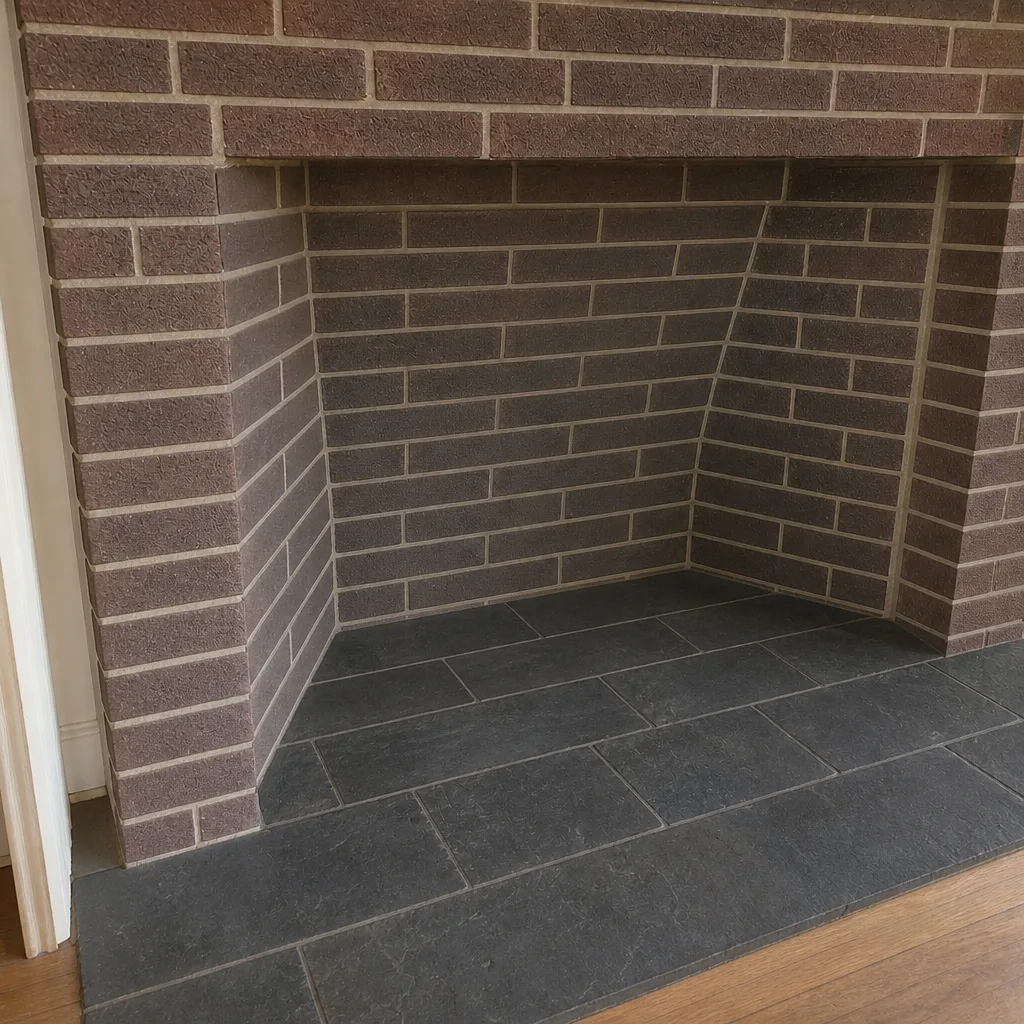 After
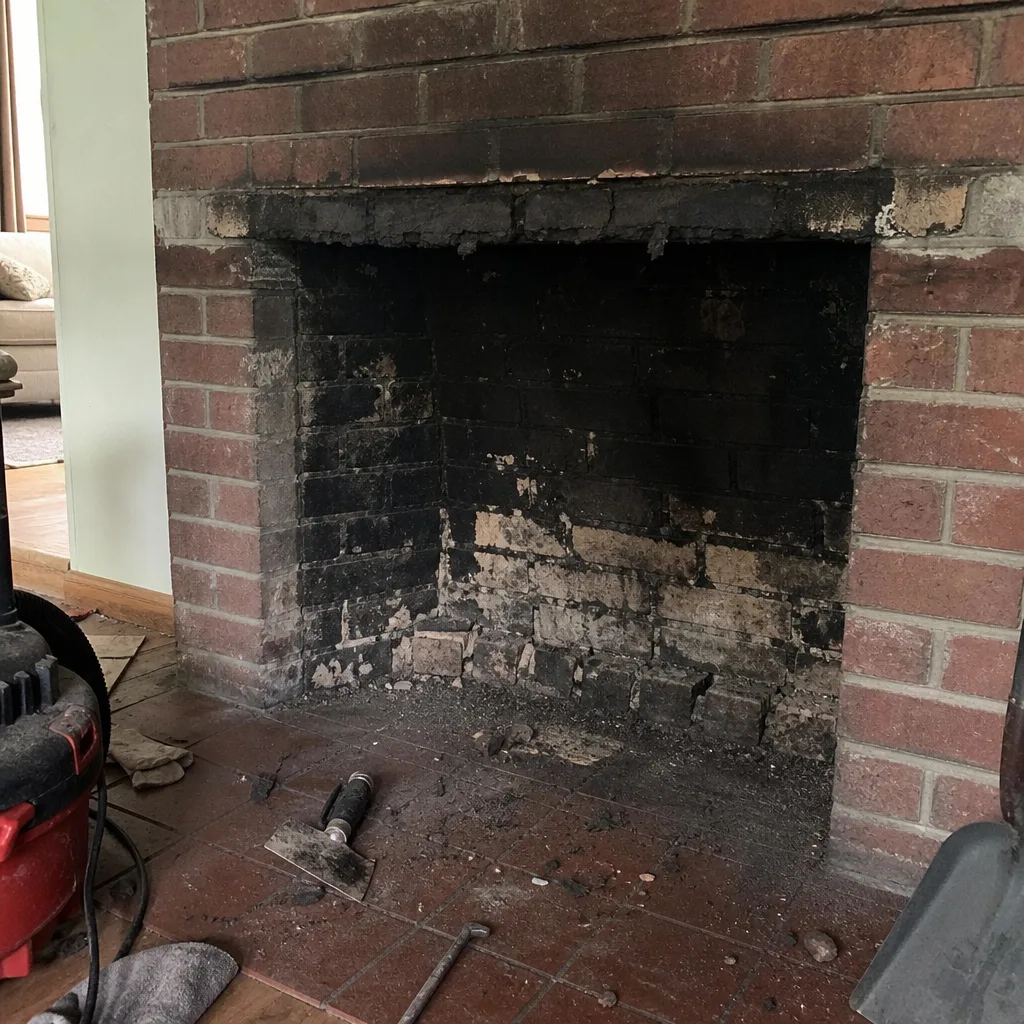 Before
 After
 Before
 After
When to Call a Professional
Call a professional if you smell a strong acrid odor inside the house when the furnace runs, if the fireplace smokes every time it’s lit despite a clean flue, or if you see any dark staining or efflorescence on the exterior that’s getting worse. Call if you’ve had a chimney fire, even a small one, because the heat can ruin a liner you can’t see. Call if the firebox back wall has cracks, or if you see rust-colored staining indicating a metal component has failed. And call if you haven’t had the chimney inspected since you moved into the house, because a St. Louis chimney from any era can look fine inside the living room and be a different story at the crown.
Hawk Chimney Sweep offers free estimates in St. Louis, with Hawk Chimney Sweep technicians who’ve handled up to 12 years of experience in this trade. Call (866) 596-7310. We answer 24/7. Fast dispatch from 7am to 7pm, Sunday through Friday.
Frequently Asked Questions
A chimney sweep in St. Louis typically costs somewhere in the region of a routine service visit, and the exact price is set per job by a written estimate after we see the chimney. The price includes the inspection and photo report along with the sweep itself. An inspection-only visit usually costs less. If a repair is needed, that’s priced separately and only after you’ve seen the camera evidence and agreed to it. Call (866) 596-7310 for an exact quote – estimates are free.
Not always, and any honest answer starts with the camera. A cracked or spalling flue can sometimes be treated with HeatShield resurfacing instead of a full reline, and a liner that’s intact just needs a sweep. When the flue has lost material, has a partial collapse, or has a section that can’t be safely sealed, a DuraFlex flexible liner may be the right repair. We show you the inspection evidence and let that drive the decision. Call (866) 596-7310 – estimates are free, and we’ll tell you what the camera shows.
For most wood-burning fireplaces in St. Louis, an annual inspection and a sweep roughly once a year is the right interval, though the frequency depends on how much you burn. A home that uses the fireplace daily in winter, or that burns wet wood, can need a sweep more often. A gas fireplace or insert has different requirements. An annual inspection is the right baseline either way, because it catches liner damage before the next season. Call (866) 596-7310 to book the inspection.
What happens is the creosote keeps building and it doesn’t stop on its own. First a layer of soot, then a hard deposit, and eventually a glazed third-degree creosote that can fuel a chimney fire. The risk isn’t the smell or the efficiency loss, it’s a chimney fire in the flue, or carbon monoxide backing up if the flue has a crack no one’s seen. In St. Louis, where the freeze-thaw cycle can crack a liner in a single hard winter, skipping the inspection matters as much as skipping the sweep. Call (866) 596-7310 and we’ll book a visit.
Usually it’s the house pressure. A gas appliance is even more sensitive to negative pressure than wood, because the firebox relies on the intended draft direction with relatively little heat to push it. A tightly sealed house pulls air down the flue from the chimney top and brings soot and odor into the room. The fix is different from a wood-burning case, and a diagnostic visit will tell you which one you’re dealing with. Call (866) 596-7310 for a free estimate.
Sometimes, but often not. If the cause is a blockage or heavy creosote, yes, the sweep solves it completely. If the cause is negative pressure from a tight house or an undersized flue, the sweep fixes the symptom and the rollback returns. The right first call is a diagnostic inspection, which is what our technicians do before deciding what to recommend. Call (866) 596-7310 and we’ll get the diagnosis right.
The Bottom Line
Chimney problems in St. Louis almost always announce themselves before they become a fire or a carbon monoxide event, and the trick is to read the symptom and trace it to the component. A fireplace that smokes when the wind shifts is reporting a pressure problem, not a dirty flue. A chimney that smells after rain has water getting in through a crown, cap, or flashing that can be repaired. Staining outside the chimney is a message about moisture inside. The freeze-thaw cycle here compounds all of it, cracking liners in ways that show up as draft trouble first and damage second. Get a diagnostic inspection with a camera, understand what the evidence shows, and address the cause, not the symptom. When the liner has deteriorated, repair options like resurfacing or a full reline exist, and knowing which one applies is a professional call made with evidence you can see.
For a verified inspection with a camera report and a written estimate, call Hawk Chimney Sweep at (866) 596-7310. We answer 24/7. Fast dispatch from 7am to 7pm, Sunday through Friday. From cap to firebox, our chimney repair team works with professional-grade materials including DuraFlex, HeatShield, Copperfield, and Olympia Chimney products to handle the full system, not just the surface. If you’re in St. Louis and dealing with a smoky flue, a persistent odor, or a chimney that needs a real diagnosis, the estimate is free and the answer comes from the evidence.
Written by the team at Hawk Chimney Sweep.