
Last updated November 15, 2026
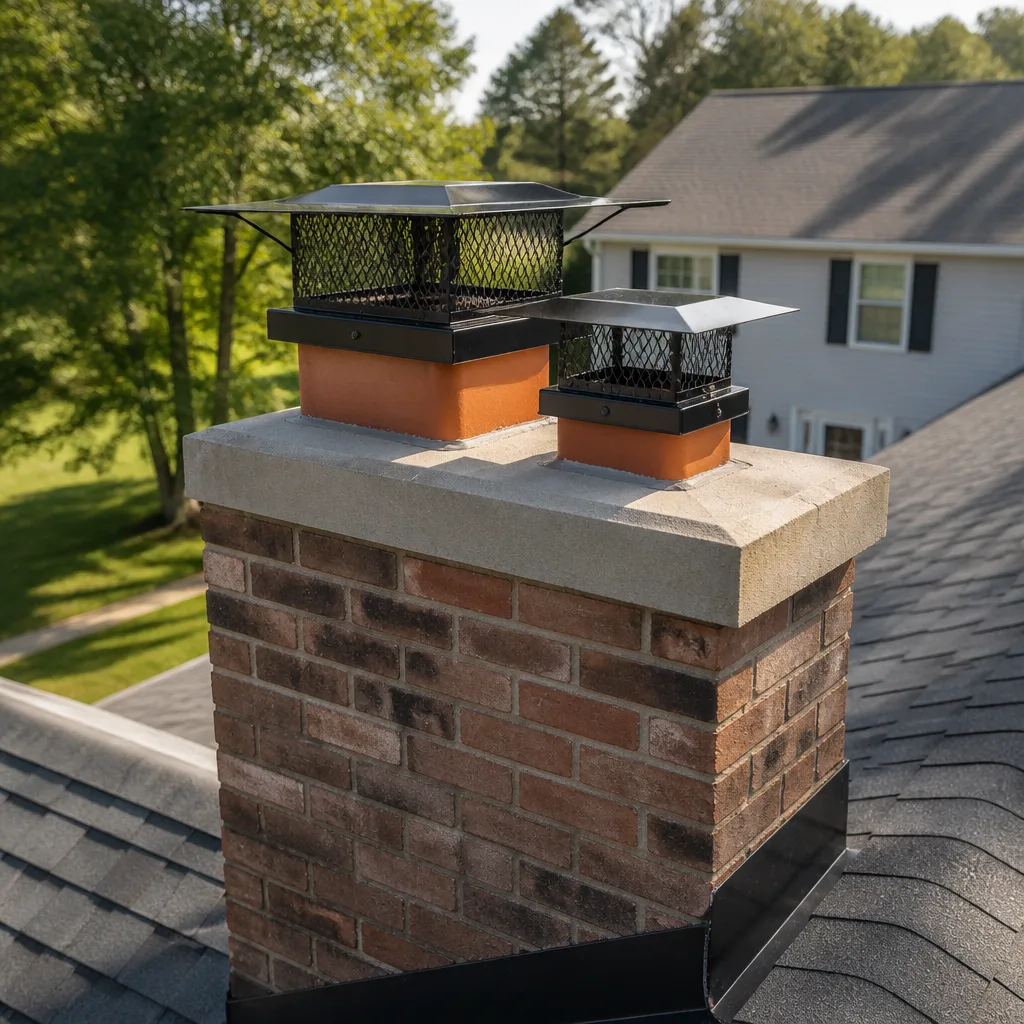 Sweep & inspection
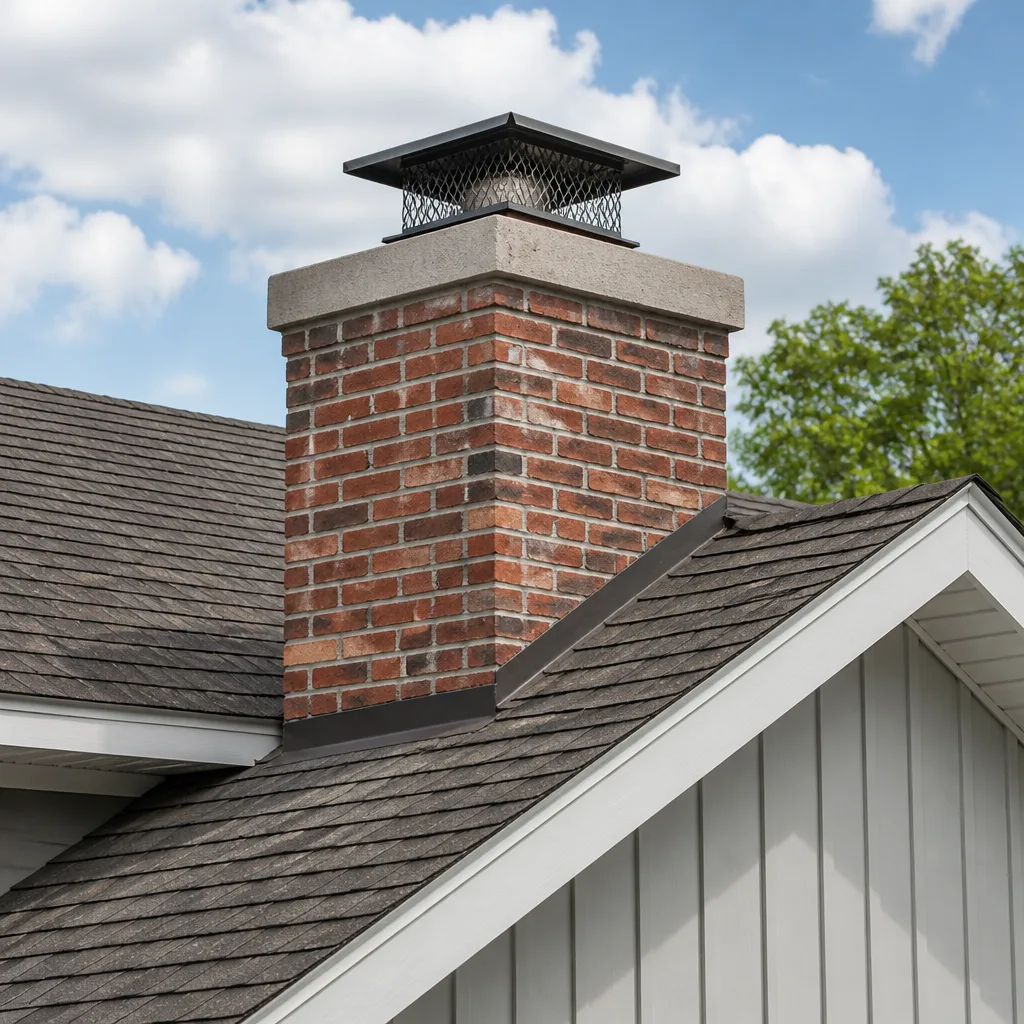 Caps & crowns
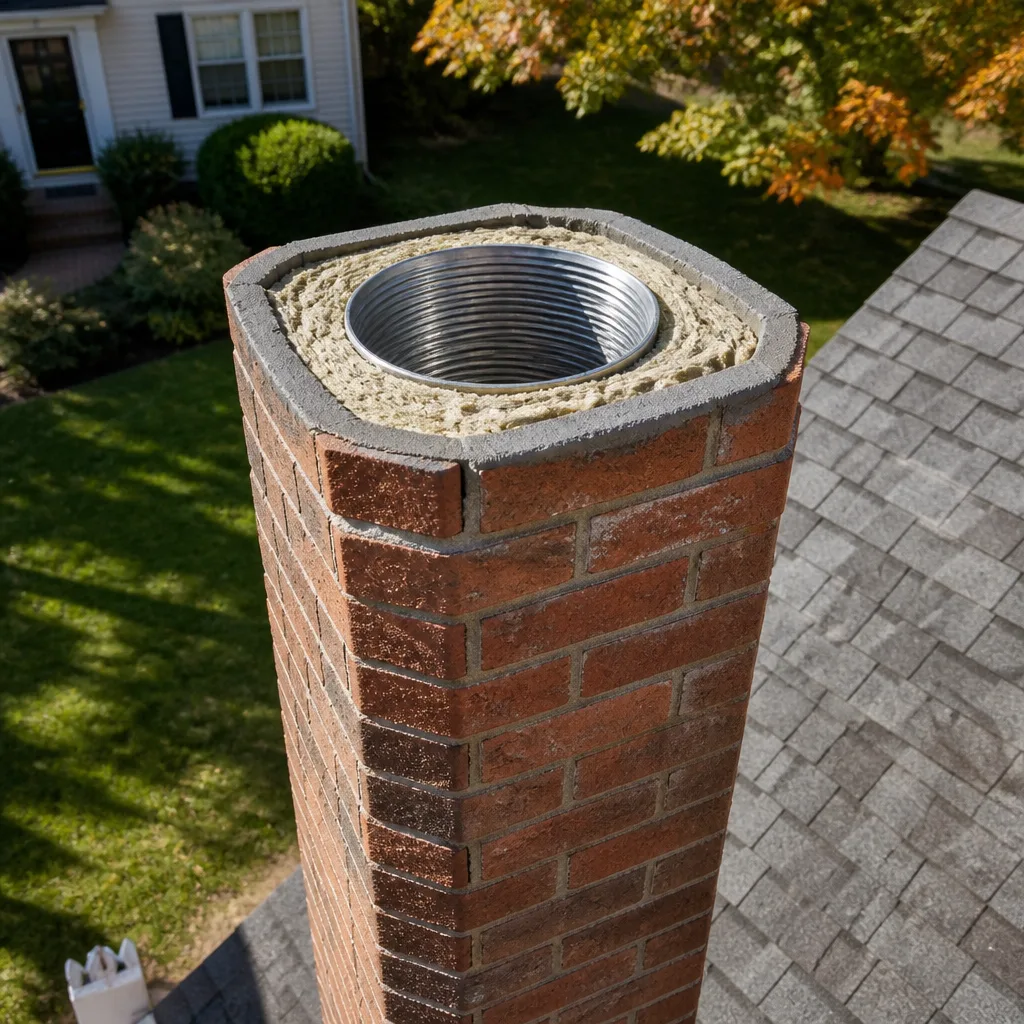 Flue relining
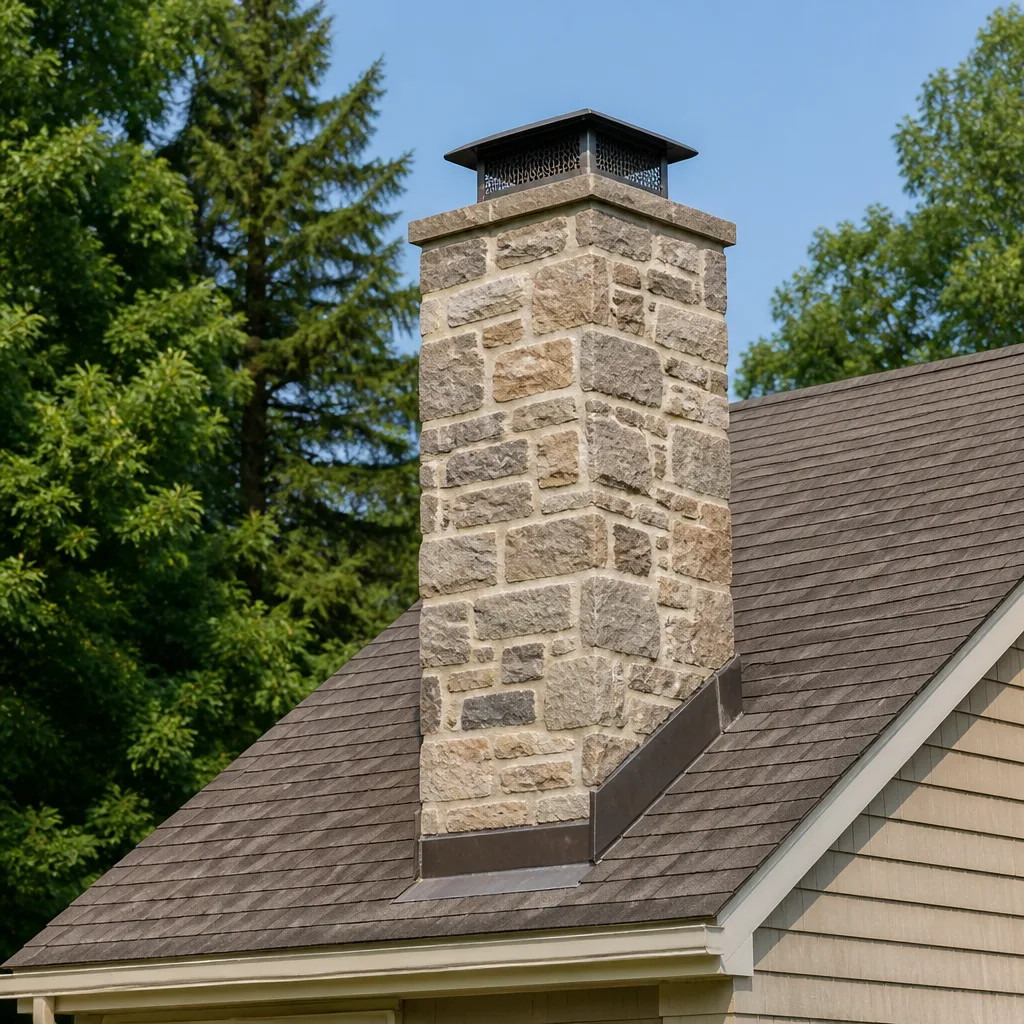 Masonry repair
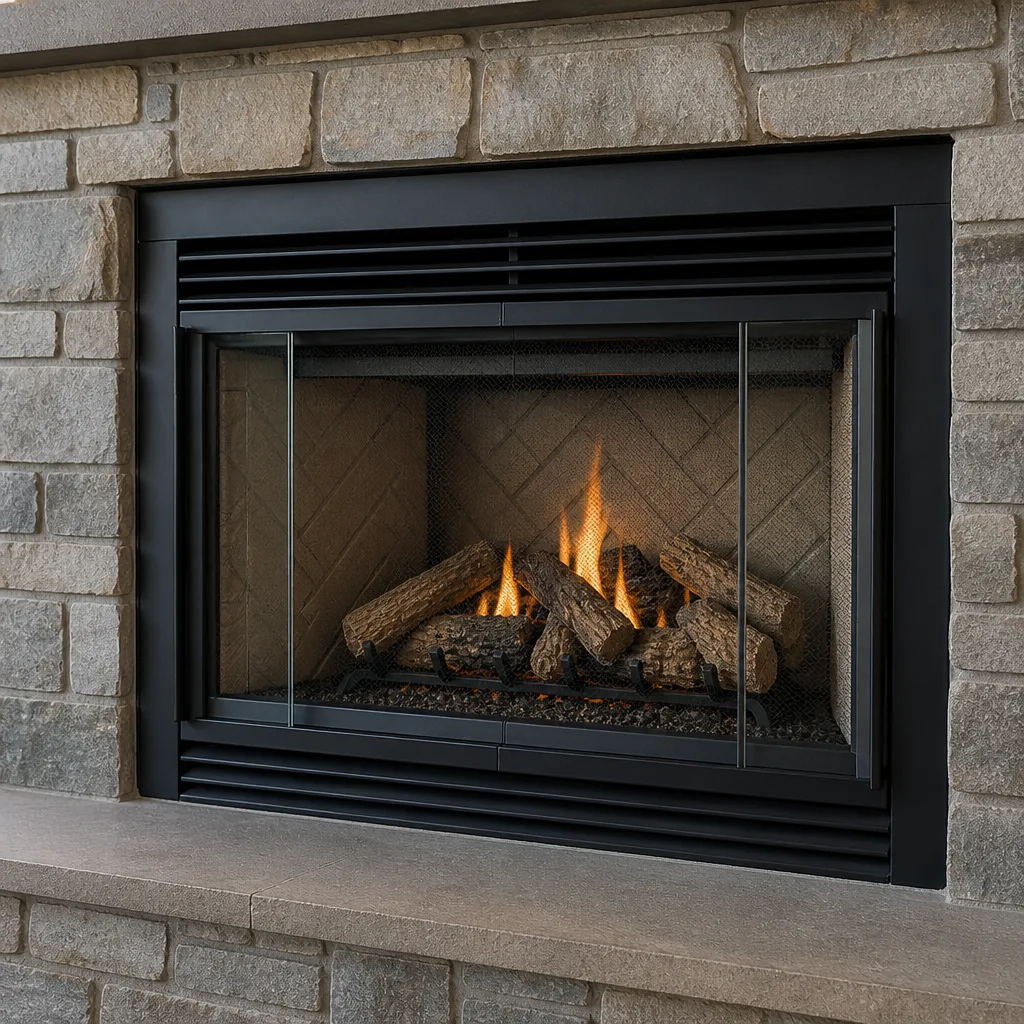 Gas fireplace service
Level 1 sweep and inspection to the NFPA 211 annual standard - flue, crown, cap, and flashing checked and photographed
Chimney sweep logs do not sweep chimneys. They loosen some creosote - which then falls where a brush and vacuum still have to collect it.
Chimney Cleaning Emergency Preparedness Guide for St. Louis Homes
A chimney fire doesn’t always announce itself with flames shooting out the top. It can reach 2,000°F inside the flue and last anywhere from a few seconds to several minutes, then burn itself out quietly. The flue can look unchanged from the hearth while cracked liner tiles or warped metal sit a few feet above the damper. That gap between what a St. Louis homeowner can see and what’s actually happening inside the chimney is where most real damage hides. This guide walks through how to recognize an active chimney fire, what to do in the first 60 seconds, how to shut the system down safely, how carbon monoxide fits into the picture, and what to document afterward. It’s written for people who’d rather understand the failure points now than improvise during one.
Quick Answer
A suspected chimney fire means stop using the fireplace immediately, get everyone out of the house, and call 911 if you see flames, hear roaring, or smell smoke where it shouldn’t be. After the fire department clears the house, don’t relight until a certified professional has inspected the flue with a camera, even if the chimney looks fine from the hearth. Carbon monoxide alarms and a working knowledge of your damper and outside air controls round out the basic emergency kit.
Styles & brands we work with
- Sweep & inspection
- Caps & crowns
- Flue relining
- Masonry repair
- Gas fireplace service
Table of Contents
- How Do You Know If Your Chimney Is On Fire?
- What to Do in the First 60 Seconds
- How to Shut Down the Chimney System Safely
- Carbon Monoxide and Chimney Systems
- Post-Fire Protocol: Before You Relight
- What to Document After a Chimney Incident
- Prevention: The St. Louis Creosote Picture
- Building a Chimney Emergency Kit
How Do You Know If Your Chimney Is On Fire?
A chimney fire is active if you hear a low roaring or rumbling sound from the flue, feel intense heat radiating from the firebox, fireplace wall, or chimney breast, or see smoke or flames exiting from places that shouldn’t have either. Those unexpected locations include the roof line, cracks in the masonry, the attic, or through the damper area. Any one of those signs means the flue is compromised and the fire has moved beyond the firebox.
What makes chimney fires tricky in St. Louis is that a significant share of them are slow-burning and nearly silent. A hot, fast fire roars. A cooler creosote fire can smolder in a flue packed with glazed deposits and self-extinguish before anyone notices more than a faint crackling. Our chimney sweep technicians regularly find the signature of past fires during routine cleanings: puffy, honeycombed creosote, discolored caps, heat-stressed metal liners, cracked clay tiles, or warped dampers. The homeowner often has no memory of a fire happening.
Signs That Point to a Fire, Not Just a Smoke Issue
- A roaring noise that sounds like a freight train or a low rumble inside the wall
- Dense smoke or visible flame from the top of the chimney or roof line
- An unusually strong, hot draft coming off the fireplace opening
- Popping, crackling, or tapping sounds that continue after the fire is out
- Blackening or blistering on the chimney cap, chase cover, or roof shingles directly around the chimney
- Smoke in the attic or around wall penetrations
Another clue: the fire is suddenly burning hotter and brighter than you expect given the wood load. That’s often a creosote ignition pulling draft through the flue. Any of those signs gets treated as an active chimney fire until a professional says otherwise.
What to Do in the First 60 Seconds
The first minute of a chimney fire decides how much gets damaged. Treat it as a checklist you already know by heart, so you don’t have to reason through it while the situation is unfolding.
- Get everyone out of the house. Even if you’re not sure it’s a fire, a suspected chimney fire means the house clears. Take kids, pets, and anyone who needs help. This is the non-negotiable step.
- Call 911. Fire departments would rather respond to a slow-burning creosote fire than a fully involved roof fire. State clearly that you suspect a chimney fire.
- If it’s safe and quick, close the damper and glass doors. If you can reach the damper without opening up the firebox and feeding air to the fire, close it. Close the glass doors too. This starves the fire of oxygen.
- Don’t throw water on the fire. A sudden thermal shock can crack a clay tile liner or warp a metal liner and cause more damage than the fire.
- Don’t re-open the firebox to look. Every time you crack the glass doors, you add air.
- Note the time. Write down or check your phone’s clock. When the fire department and later the inspector ask how long the fire burned, having a real timestamp makes their job easier.
If your home has a wood stove rather than an open fireplace, shut the air intake control all the way and close the stove door. If your stove has a barometric damper, close it as well.
How to Shut Down the Chimney System Safely
Cutting off the air supply is the single most effective way to slow a chimney fire. It’s also where people accidentally do the opposite. The main tools are the damper, the glass doors, and, in some homes, an outside air kit. Each needs to be closed in the right order without increasing draft.
The Order That Works
- Close the firebox glass doors first. This limits the immediate air coming into the fire.
- Close the damper. The damper sits directly above the firebox. On a wood stove, that’s the stove-pipe damper, not a barometric one.
- Close the outside air supply if your system has one. In newer St. Louis-area homes built to tighter air-sealing standards, an outside air kit is common. Look for the intake on the exterior wall or near the firebox and shut it down.
- Don’t touch the flue itself. No attempts to insert a fire extinguisher through the damper, no closing the chimney cap at the top.
- Avoid running bathroom fans, kitchen exhaust fans, or a clothes dryer. These pull air out of the house and can, in a tight home, increase pressure differences around the firebox.
What Not to Do
- Don’t open windows “to let smoke out.” That feeds the fire.
- Don’t use a garden hose on the firebox or flue.
- Don’t climb on the roof to close a chimney cap. Roof work during a chimney fire is how people fall.
- Don’t try a dry-chemical flare or a chimney fire stick unless you already have one and the fire department has advised it. These devices are useful for early containment, not for a fire you don’t yet understand.
Every chimney repair visit we do in St. Louis includes walking the homeowner through where their damper, glass doors, and outside air controls actually sit, because a surprising number of people can’t locate all three on the night of a real fire.
Carbon Monoxide and Chimney Systems
A chimney system is a negative-pressure appliance. It’s designed to pull combustion gases up and out. When any part of that system fails to keep the draft going the right direction, combustion gases push back into the living space instead of out through the flue. Carbon monoxide is the most dangerous of those gases, and it has no smell, no color, and no taste.
The three failure modes we see most often in St. Louis homes are blocked flues, cracked liners, and downdraft conditions. A blocked flue can come from a bird nest, a leaf pile, a deteriorated cap, or so much creosote that the passage is restricted. A cracked liner lets exhaust leak out through the gap between the flue and the surrounding masonry or chase, allowing CO to enter the home through the wall rather than exit through the top.
Downdraft is a separate animal. On a cold, still morning or in a home with particularly strong exterior pressure effects, outside air pushes back down the flue. In a tight house with bath fans, dryers, and range hoods pulling air out, the same effect can pull exhaust back into the living room. If you smell that acrid “chimney smell” when the fireplace isn’t lit, that’s often the signal.
What Makes CO Risk Higher in St. Louis Homes
- Tightly sealed homes with modern exhaust fans and mechanical ventilation pulling air out of the house
- Older masonry chimneys with unlined or partly lined flues
- Chimney caps that have been damaged by wind or ice
- Gas fireplaces and inserts that vent through smaller flues and were never designed for the home’s current air sealing
- Years of creosote buildup that has reduced the flue opening more than the homeowner realizes
Have at least one carbon monoxide alarm on every level of the house and in the room closest to the fireplace or stove. Test it monthly and replace the whole unit on the manufacturer’s schedule, not just the battery. A CO alarm is not an alternative to inspection, but it’s the only tool that will catch a problem no one can smell.
Post-Fire Protocol: Before You Relight
After a suspected chimney fire, no relight without a camera inspection. Not after a “small” fire. Not after the fire department says the fire is out. Not on the theory that the fire self-extinguished and no one got hurt. The heat from a chimney fire attacks the flue from the inside, and damage often sits in places impossible to see from the hearth.
The reason a camera inspection matters: a chimney fire can crack clay tile liners that still look intact from below, warp metal flexible liners, or separate joints in a masonry flue. A flashlight and a mirror at the top of the chimney can miss all of these. A camera run from the top down or from the firebox up through the flue shows exactly what state the flue is in.
What the Inspection Should Cover
- Full flue from firebox to cap, viewed with a camera
- Liner condition: cracks, spalling, gaps between tiles, warped metal, or failing seams
- Smoke chamber and damper condition
- Chimney cap and crown
- Visible exterior masonry, chase cover, and roof flashing
- Combustible clearances from the chimney to framing and roofing
This is the point where documentation and inspection overlap. The inspection report, complete with photos, is the document your insurance company will want, and it’s the most reliable record of what the chimney looked like immediately after the fire.
Repairs That May Come Up
If the inspection shows cracked or spalling clay tiles, a resurfacing method like HeatShield can sometimes restore the interior without a full tear-out. If the liner is more seriously compromised, a flexible liner system such as DuraFlex may be the right way to bring the flue back to a code-compliant, safe state. We use these professional-grade products because they’re tested and rated for the job; big-box store substitutes are not.
What to Document After a Chimney Incident
The 24 hours after a chimney incident are the ones homeowners most often waste. Most people call the fire department, get the fire out, and then wait days before calling an inspector, an insurance agent, or anybody else. Every hour that slips by makes the insurance claim harder, because visible evidence fades and the timeline gets fuzzy.
What to Gather Immediately
- Fire department report number. Ask the responding crew for the incident number and the name of the report. You’ll need this on the claim.
- Photographs of the firebox, damper, chimney exterior, and roof. Take them before anyone cleans or moves anything. Include the exterior of the chimney and any visible soot or damage in the living space.
- A written timeline. When you noticed the fire, when you called 911, when the fire department arrived, and when it was declared out.
- Copies of your homeowner’s insurance declarations page and the phone number for the claims line, kept with the other paperwork.
- A camera inspection report from a certified professional. Photographs plus written findings, on paper or PDF, not just a verbal all-clear.
- Any HVAC or CO alarm records. If a CO alarm went off, note the date and time and which alarm.
What Most Homeowners Miss
- They take photos after cleanup, not before.
- They call their insurance agent several days later, after the soot has been wiped down.
- They relight the fireplace to “test it out” before it’s been inspected.
- They accept a verbal inspection report without photos.
- They don’t ask the fire department for the report number.
If you can, get a camera inspection scheduled within the first few days. The photo set from that inspection is the strongest single piece of documentation we hand homeowners going into an insurance discussion.
Prevention: The St. Louis Creosote Picture
St. Louis winters are the kind that make homeowners burn a lot of wood, often with a mix of seasoned and not-quite-seasoned logs, and often at low, smoldering settings during milder stretches. That combination, cool flue temperatures plus incomplete combustion, is exactly what lays down creosote. The flue cools as the smoke rises, moisture condenses, and deposits build on the liner. Over a season or two, that’s the fuel load that makes a chimney fire possible.
Every St. Louis region has different burning habits. The older brick homes in neighborhoods like St. Louis city, Soulard, or Tower Grove tend to have long masonry flues that run cold on the upper sections and build creosote heavily. Suburban homes in Kirkwood, Webster Groves, or Chesterfield often have shorter flues or prefab metal systems with different failure patterns. Neither is inherently safer; they’re just different shapes of the same risk.
The Prevention Checklist
- Burn seasoned wood only, ideally split, stacked, and covered for at least a full season
- Don’t burn household trash, wrapping paper, or Christmas trees in the firebox
- Don’t burn at smoldering low settings for long stretches; that’s creosote country
- Watch the smoke on a cold start. Black, dense smoke means the flue is cold and combustion is poor
- Keep the chimney cap intact and clear of debris
- Get a professional sweep and camera inspection at the frequency your system’s usage actually calls for, not on a fixed calendar that ignores how you burn
Storm season in St. Louis also matters. Ice, wind, and wildlife all take shots at chimney caps and crowns, and a loose cap or cracked crown lets water into the flue, which slowly degrades the liner. An annual Hawk Chimney Sweep inspection catches those before they turn into a full reline.
Building a Chimney Emergency Kit
Most homeowners have a fire extinguisher near the kitchen and nothing near the fireplace. A small, fireplace-adjacent kit costs very little to put together and means you’re not rummaging in a closet if something goes wrong.
What Belongs in the Kit
- A dry-chemical extinguisher rated for Class A fires, kept within reach of the fireplace but not so close that flames would be between you and it
- A pair of leather work gloves for the damper and door handles
- A flashlight, with good batteries
- A small notebook and pen for the timeline and details
- Printed contact numbers: the fire department’s non-emergency line, your insurance claims line, and a certified chimney professional
- A carbon monoxide alarm kept in the same room as the fireplace or stove
- Manufacturer documentation on your fireplace, insert, or stove, if you have it
We also recommend a laminated one-page chimney shut-down sheet posted inside a cabinet near the fireplace. When everyone in the house knows where the damper, glass doors, and outside air controls are, the first 60 seconds of a real chimney fire become muscle memory instead of a search.
Common Mistakes to Avoid
- Assuming no flames means no fire. Slow-burning creosote fires are often the most damaging because they run long enough to heat-stress the liner without anyone realizing it.
- Relighting before a camera inspection. A flue that looks fine from the hearth can be cracked or warped inside. In St. Louis, where a lot of homes have unlined or partly lined older masonry, a hidden crack is exactly where carbon monoxide gets through.
- Using water on a chimney fire. Thermal shock can crack clay tile lines and warp metal liners, turning a repairable situation into a reline.
- Skipping the fire department call because “it seemed small.” The incident report matters for insurance, and what looked small from the hearth often wasn’t small inside the flue.
- Photographing after cleanup. Insurance adjusters care about what the damage looked like before anyone touched it.
- Burning unseasoned wood to “save money.” Wet wood burns cool, builds creosote fast, and drives the flue toward the exact condition that makes chimney fires possible.
- Ignoring the CO alarm that goes off only once. If the alarm beeps and then goes quiet, don’t assume it was a false alarm. Downdraft and backdraft conditions can come and go with the weather.
See the difference
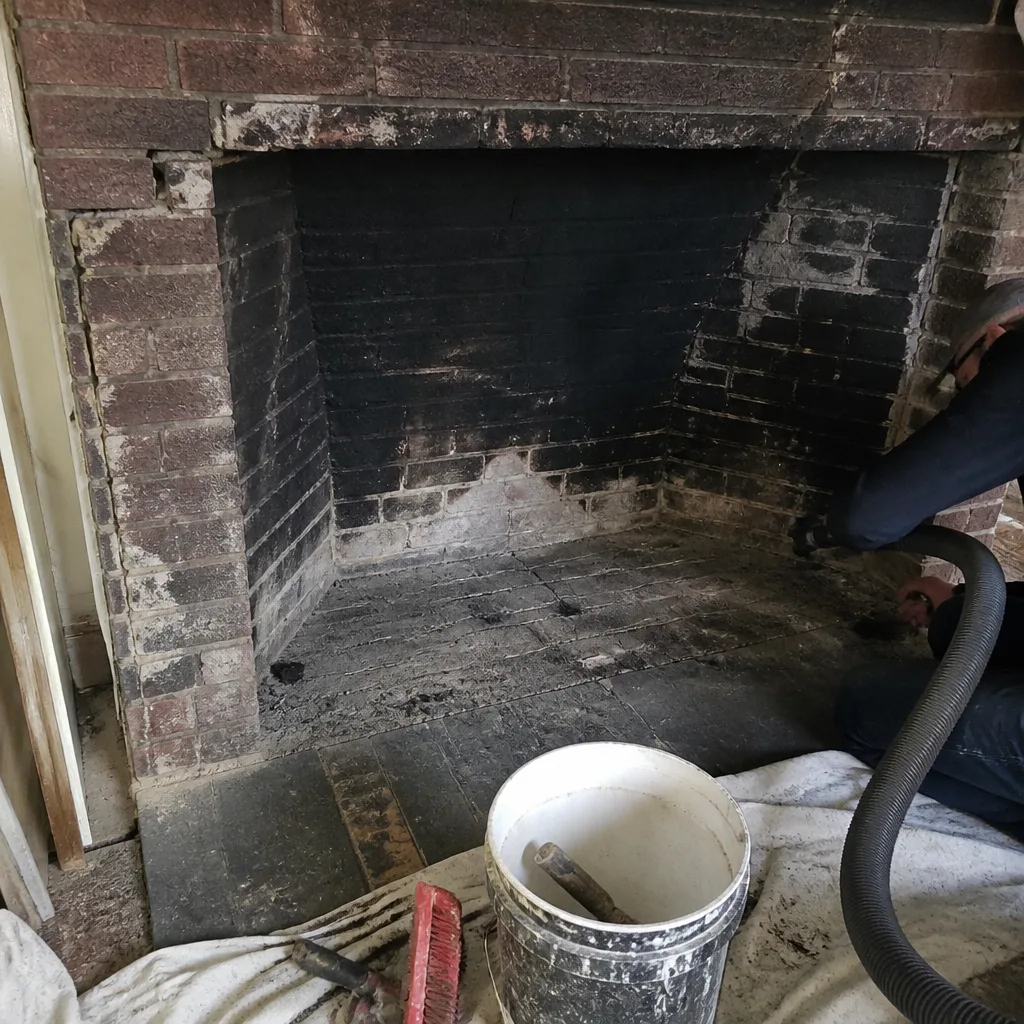 Before
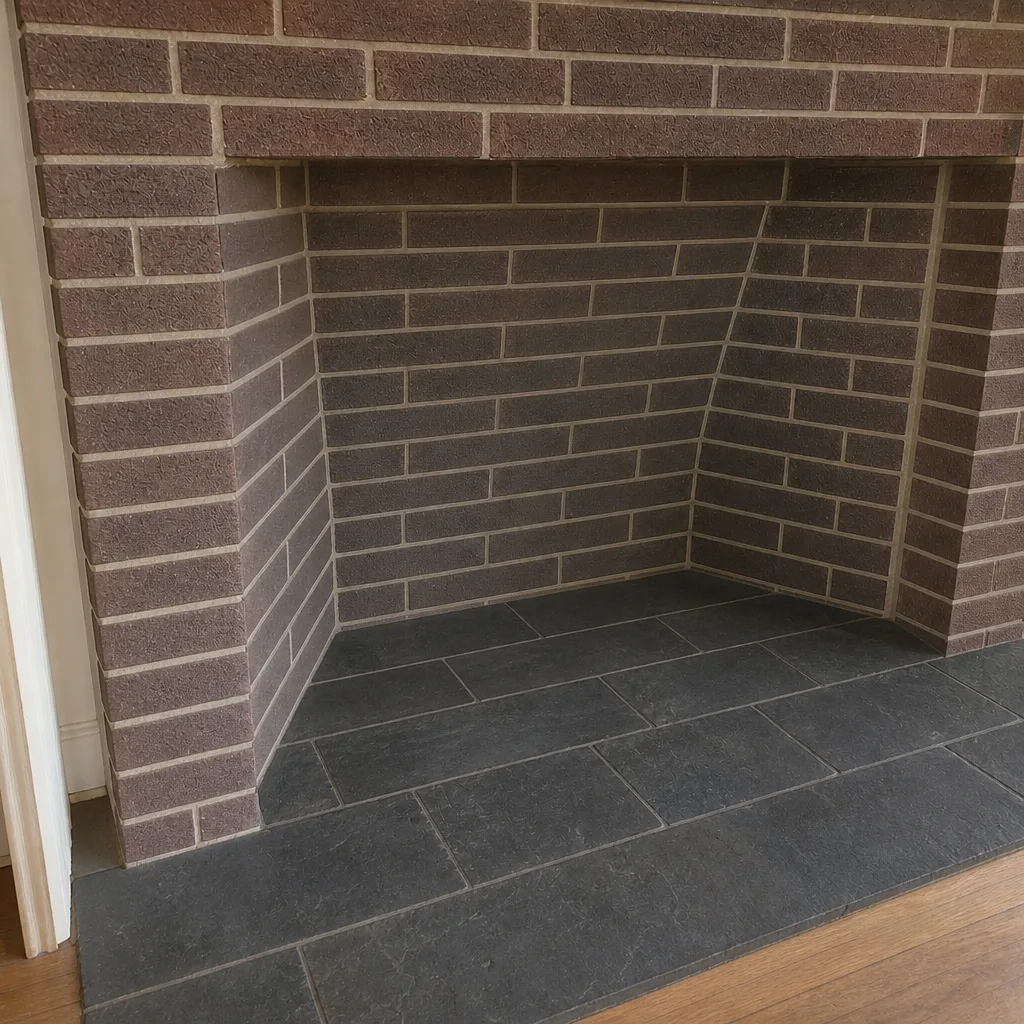 After
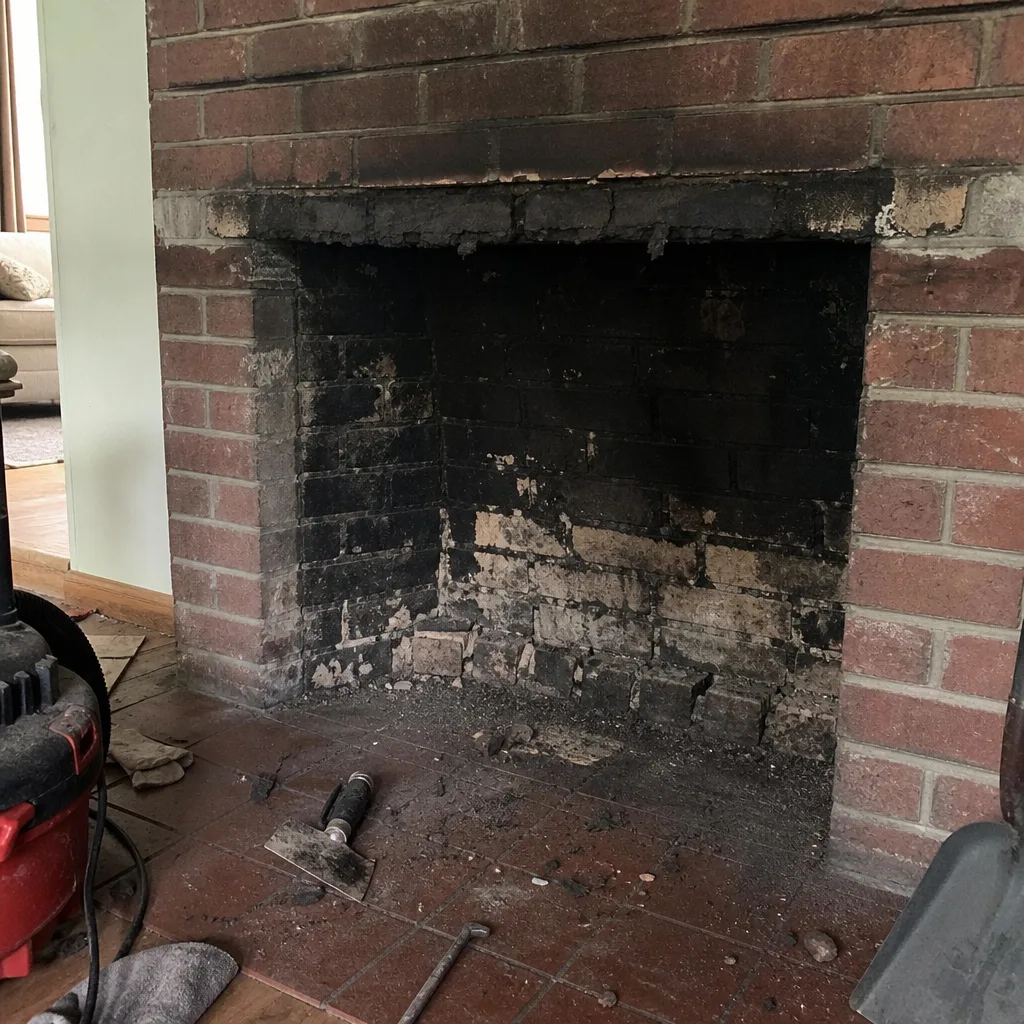 Before
 After
 Before
 After
When to Call a Professional
Call a professional immediately if there’s been any suspected chimney fire, any CO alarm event that wasn’t traced to a dead battery, or any time you smell exhaust or wood smoke in the living space when the fireplace is not burning. Call before relighting after any of those events, and call if the chimney cap, crown, or masonry is visibly damaged after a storm. Routine sweep and inspection, on the schedule that fits how much and how you burn, prevents most emergencies before they start. Our technicians have up to 12 years of experience with chimney systems from firebox to cap, using professional-grade products like Famco caps and Copperfield components when a repair is needed. Hawk Chimney Sweep offers free estimates in St. Louis, with a flat price agreed before any work is booked, and every inspection includes a camera inspection and photo report you can see for yourself. Call (866) 596-7310. We answer 24/7. Fast dispatch from 7am to 7pm, Sunday through Friday.
Frequently Asked Questions
You can’t reliably know a chimney fire is out from the hearth. Visible flame and roaring may stop while creosote inside the flue is still smoldering, which means the fire department’s assessment is the official answer, not what you’re hearing from the fireplace. Treat the fire as out only when the responding crew says it is and the chimney has been inspected. Call (866) 596-7310 for an inspection once the fire department has cleared the house – estimates are free.
Yes, and that’s exactly what makes chimney fires so deceptive. A slow-burning creosote fire can ignite, run hot for a short time, and self-extinguish without visible flame, but the heat it generated can still crack liner tiles, warp metal liners, or separate joints inside the flue. Skipping the inspection after a self-extinguished fire is one of the most common reasons a next-season fire is worse. Call (866) 596-7310 to get a camera inspection scheduled – estimates are free.
Not always, but the question gets answered by what the camera shows, not by what’s visible from the hearth. Spalling or cracked clay tiles can sometimes be resurfaced with a system like HeatShield. A liner with broken tile sections, warped metal, or gaps that can’t be sealed often calls for a flexible liner system like DuraFlex. Nothing gets recommended without camera evidence you can see on the report. Call (866) 596-7310 for an exact quote – estimates are free.
Call your insurer the same day or the next morning, and gather the fire department report number, pre-cleanup photos of the firebox and exterior, a written timeline, and a camera inspection report from a certified professional. Most claims get harder when evidence fades or the timeline gets murky, so front-load the documentation. We can work with your insurer on the inspection and repair paperwork. Call (866) 596-7310 to start that process – estimates are free.
The honest answer depends on how much and how you burn. A household that runs a fire most nights of the heating season needs a sweep and inspection more often than one that lights the fireplace a few times a year, and cool, smoldering fires build creosote faster than hot, clean burns. Rather than guessing, get the flue inspected and let the condition of the liner set the schedule. Call (866) 596-7310 to book a sweep and inspection – estimates are free.
Typical chimney sweep pricing in the St. Louis market depends on the flue’s length, condition, and whether an inspection and camera report are included. Our price is set per job by a written estimate before any work is booked, and the estimate itself is free. Nothing gets recommended that the camera doesn’t show, and if the work can safely wait, we say so. Call (866) 596-7310 for an exact quote – estimates are free.
The Bottom Line
A chimney emergency is rarely a bolt from the blue. It’s a sequence: creosote builds, a liner degrades quietly, a fire catches, and the homeowner either knows what to do in the first 60 seconds or doesn’t. In St. Louis, where long masonry flues and cold-weather burning habits put real creosote loads on the liner every season, that sequence plays out more often than people expect. The protective moves are simple: know your damper and outside air controls, keep a CO alarm in the fireplace room, get a camera inspection after any incident, document before you clean up, and get the flue swept and inspected on a schedule that reflects how you actually burn. One call handles the whole system, and nothing is recommended without camera evidence you can see for yourself.
Call (866) 596-7310 for a free estimate. We answer 24/7. Fast dispatch from 7am to 7pm, Sunday through Friday.
Written by the team at Hawk Chimney Sweep.